PP · mostly void · over 40 years
Rainwater Storage Module
A polypropylene block that is mostly void, stacked on site into an underground tank for attenuation, harvesting or infiltration.
 Wanlihe
 Products
Applications
Guides
FAQ
Products
Applications
Guides
Standards
FAQ
Products
Applications
Guides
FAQ
Stormwater attenuation systems exist because of a number the developer does not control. The drain downstream can only take so much, and the site now produces more than that. Attenuation holds the runoff back on site and releases it slowly, so the peak reaching the drain is no worse than it was before anything was built. On most developments that is a planning condition rather than a choice.
Attenuation is about the rate, not the volume. Water arrives during a storm and has to leave afterward, at a rate the drain downstream can accept. The tank is a delay, and its size is set by the difference between what arrives and what is allowed to leave.
That is why an attenuation tank is not sized like a storage tank. A store is sized by how much water has to be kept. An attenuation tank is sized by the storm it has to sit through and by the discharge rate the site has been given.
Independent guidance rates geocellular systems well on peak flow reduction, which is exactly the job here. It also rates them poorly on volume reduction where the system only stores, because nothing soaks away. If the site also has to reduce volume, that has to come from infiltration somewhere else in the layout.
The tank sits under whatever surface is producing the runoff. Under a car park, under an access road, under a landscaped area, sometimes under a play area.
That is the practical argument for a modular tank over a cast chamber. Guidance generally treats the component as suitable beneath trafficked and non-trafficked ground alike, provided the structural performance has been shown to be adequate for the loading. Where the surface has to keep working, being able to bury the tank under it is the whole point.
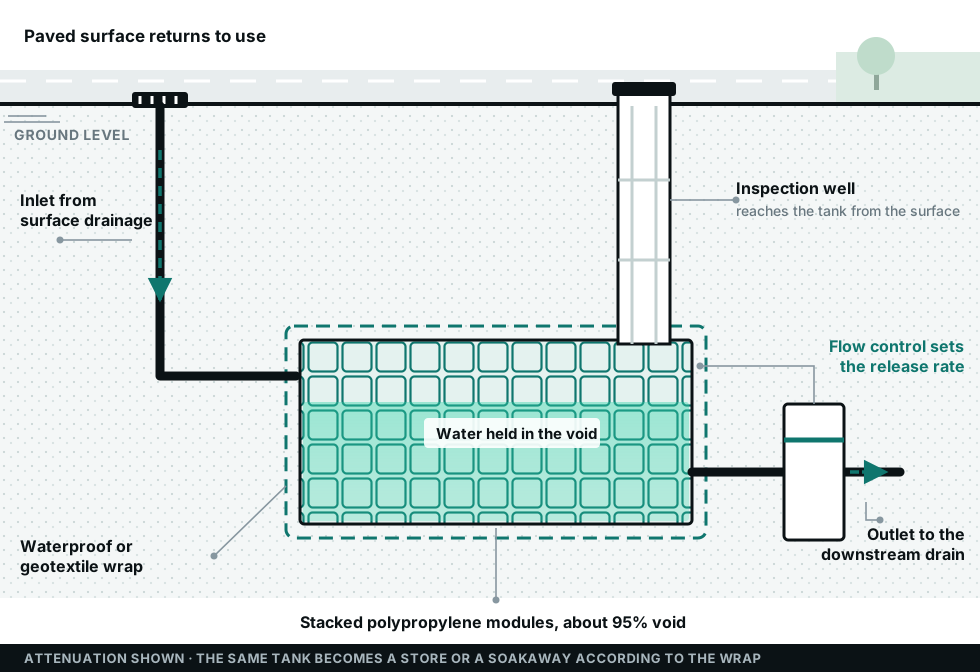
A tank with no outlet controls nothing. The flow control at the outlet is what turns a hole in the ground into an attenuation system, and it is sized against the discharge rate the site is allowed.
The two are designed together. A tank sized without knowing the permitted discharge rate is a guess, and it is usually a guess in the expensive direction. Ask for the permitted rate first.
A geocellular system generally provides no water quality treatment. It also provides no amenity value of its own, which is worth knowing if the site is being assessed on more than flood risk.
If the runoff needs treating before it leaves, the treatment has to be a separate stage ahead of the tank, sized for the sediment it will catch. That stage also has to be reachable, because whatever it catches has to come out again.
Guidance is honest that a buried geocellular system can be difficult to monitor and difficult to maintain. Performance is hard to check once the surface above is back in use.
That does not make the system a bad choice. It makes the access provision the part of the design that decides whether the tank still works in ten years. Maintenance generally means regularly inspecting silt traps, manholes, pipework, and pre-treatment devices, and clearing sediment as needed. Every one of those needs to be reachable, and none of them can be added later.
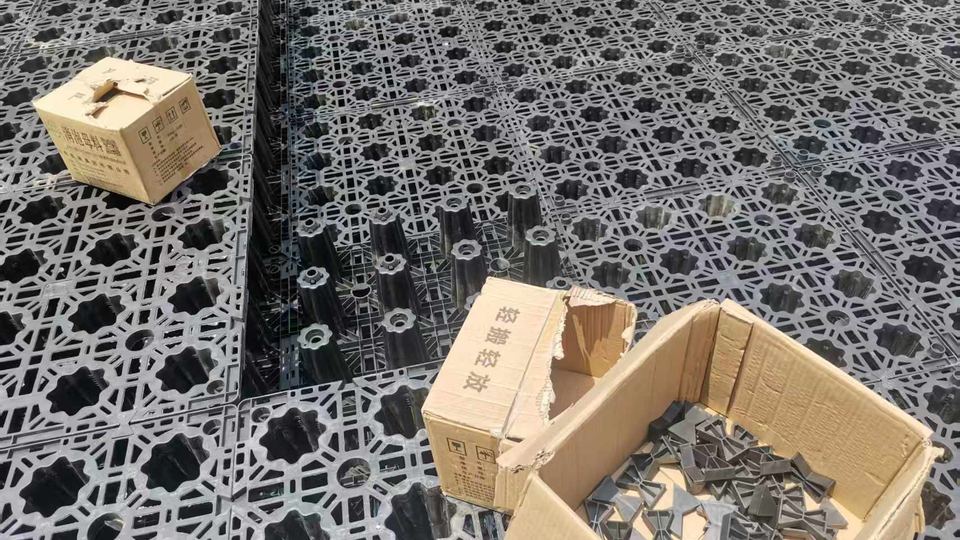
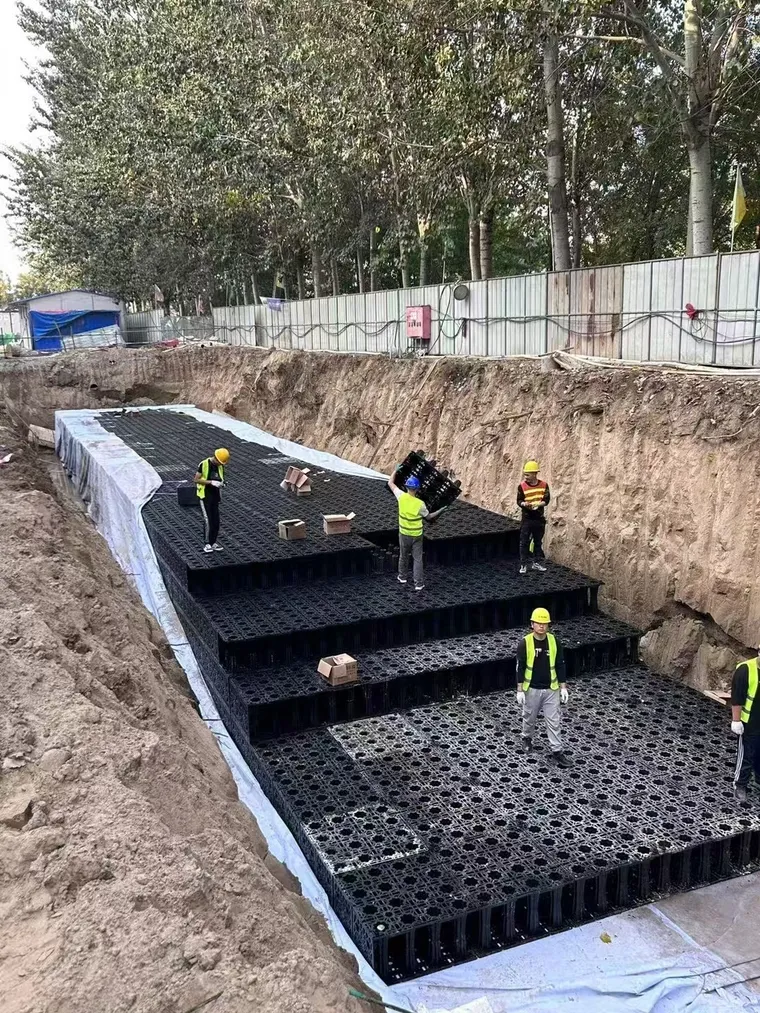
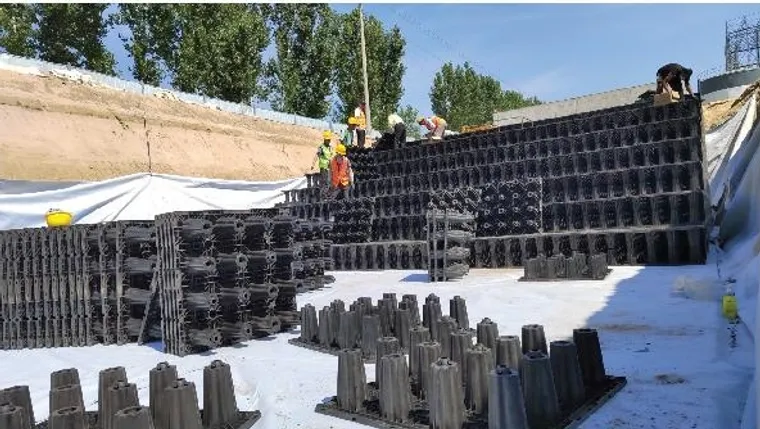
Modules assembled in the excavation
Tank being assembled
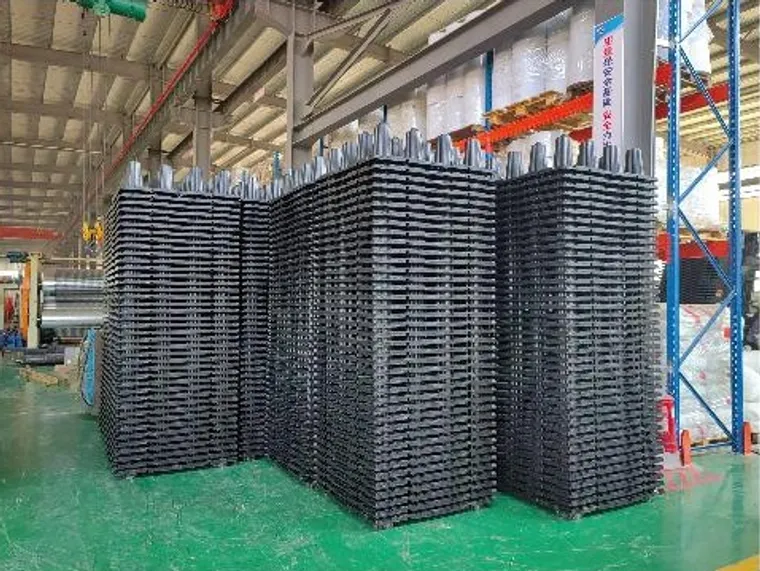
Modules in stock
PP · mostly void · over 40 years
A polypropylene block that is mostly void, stacked on site into an underground tank for attenuation, harvesting or infiltration.