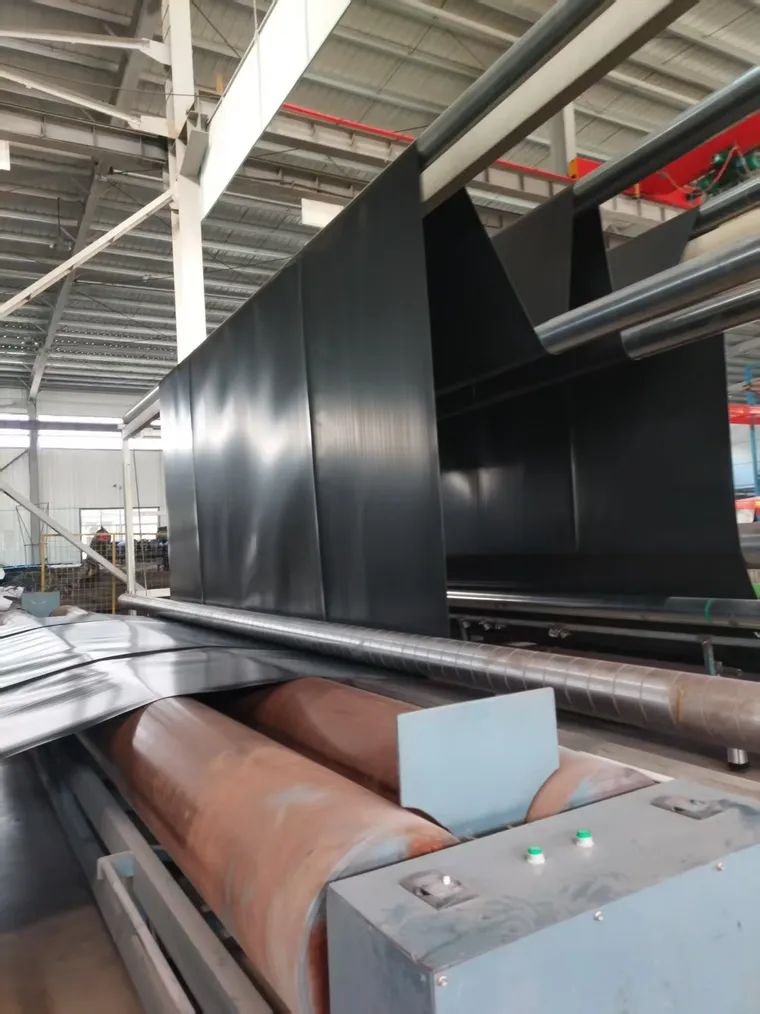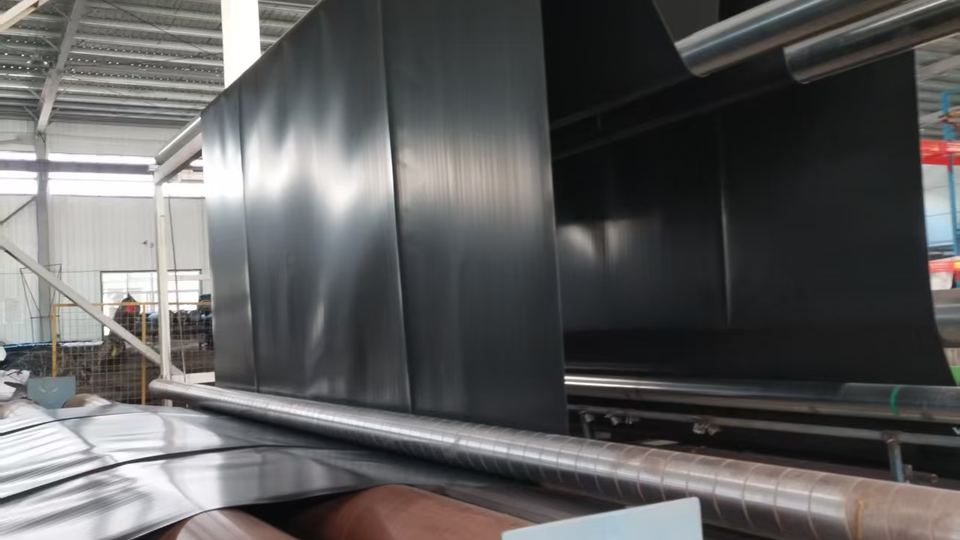
HDPE geomembrane sheet
We manufacture HDPE geomembrane sheet for containment lining. The sheet is made from virgin polyethylene resin, mostly HDPE with a small additive package, and formed by three-layer co-extrusion. Thickness runs from 0.25 mm to 3.0 mm, and rolls from 4 m to 12 m wide. Wider rolls mean fewer welded joints across a cell, and every joint removed is a joint that cannot leak.
HDPE geomembrane specification
| Property | Value |
|---|---|
| Base resin | Virgin polyethylene resin |
| HDPE content | 97.5% |
| Additives | About 2.5%: carbon black, UV absorber, stabilizer |
| Construction | Three-layer co-extrusion |
| Thickness | 0.25–3.0 mm (about 10–120 mil) |
| Roll width | 4–12 m (about 13–39 ft) |
| Surface | Smooth and textured |
| Production line | Italian-made, fully automatic |
| Material standard | GRI-GM13 covers HDPE sheet from 0.75 mm upward; our range starts below that |
-
Base resin
- Value
- Virgin polyethylene resin
-
HDPE content
- Value
- 97.5%
-
Additives
- Value
- About 2.5%: carbon black, UV absorber, stabilizer
-
Construction
- Value
- Three-layer co-extrusion
-
Thickness
- Value
- 0.25–3.0 mm (about 10–120 mil)
Show all 9 rows
-
Roll width
- Value
- 4–12 m (about 13–39 ft)
-
Surface
- Value
- Smooth and textured
-
Production line
- Value
- Italian-made, fully automatic
-
Material standard
- Value
- GRI-GM13 covers HDPE sheet from 0.75 mm upward; our range starts below that
What defines this product
Resin base
The compound starts from virgin polyethylene resin, not reprocessed material.
Three-layer build
Three-layer co-extrusion forms the sheet in a single pass.
Stabilized compound
Carbon black, a UV absorber, and a stabilizer are compounded into the resin, because the sheet has to survive exposure.
Wide rolls
Rolls run from 4 m to 12 m wide. A wider roll means fewer field welds across the cell, and the welds are where liners fail.
Two surface finishes
Both a smooth and a textured surface are produced, so the slope decides which one is ordered.
Italian production line
The sheet is produced on a fully automatic line of Italian make.
Where it is used
-
Landfill lining
Containing leachate and keeping it away from groundwater beneath the cell.
-
Mining containment
Holding process and drainage solutions where they can be recovered rather than lost.
-
Ponds, canals and reservoirs
Controlling seepage where the water is the asset.
The sheet is only part of a lining system, but it is the part that has to be right before anything else can be. Two properties decide most of it: what the compound is, and how wide the roll is.
Why the resin base matters
The compound starts from virgin polyethylene resin rather than reprocessed material, with HDPE making up 97.5% of it. The remaining 2.5% is an additive package: carbon black, a UV absorber, and a stabilizer, compounded into the resin rather than coated onto it.
That package is not decoration. A geomembrane is typically exposed on site before it is covered, and it is expected to remain stable for decades afterward. Oxidative induction time, carbon black content and dispersion, and oven aging are all properties the standard specification tests for, and all of them come back to the compound.
Why roll width is a commercial decision
The widest roll in the range is not a marketing number. Every meter of width removes a weld line from the cell.
Seams are generally checked by non-destructive testing along their length and by destructive testing of cut samples, and that testing costs money and time on every joint. Fewer joints means less testing, a shorter program, and fewer places where the liner can leak.
Smooth or textured
Both are made on the same line. Smooth sheet is the default where the liner sits on a prepared base and nothing has to grip it. Textured sheet gives the layers above and below something to engage with, which matters on a slope where interface friction is the design case.
The choice belongs with whoever is checking the slope stability, because it changes the interface shear strength, and interface shear is typically tested for each contact in a lining system.
What we do not claim
GRI-GM13 is the standard specification buyers usually name. It applies to HDPE geomembranes at a formulated sheet density of 0.940 g/cc or higher, and its thickness scope starts at 0.75 mm.
Our range runs from 0.25 mm to 3.0 mm. Part of the range therefore sits below the thickness at which GM13 begins, and a sheet in that part of the range is outside the specification’s scope.
That does not make those sheets unsuitable. It means the standard is not the right document to quote against them, and we will say so rather than let it pass.
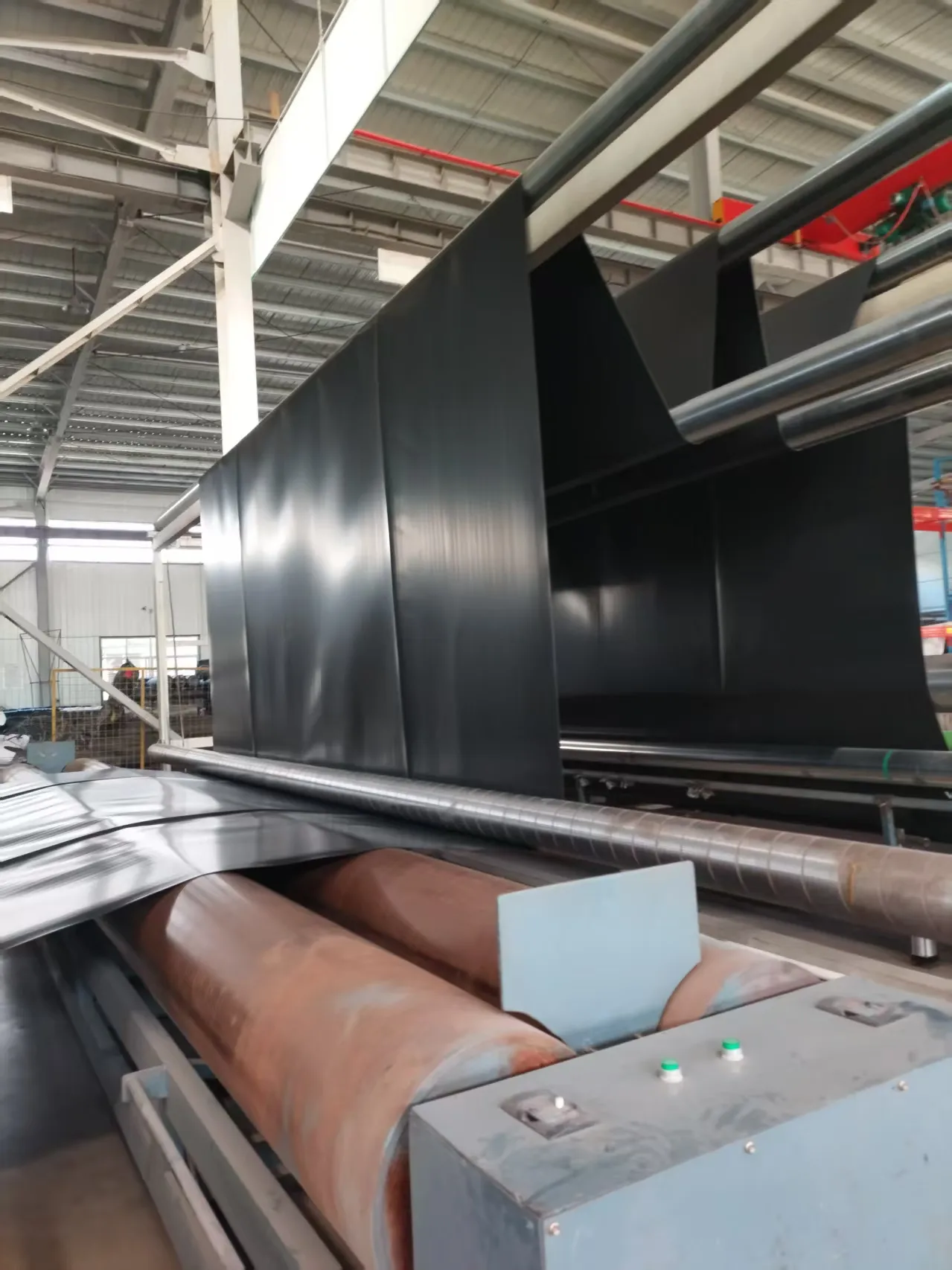
HDPE sheet as supplied
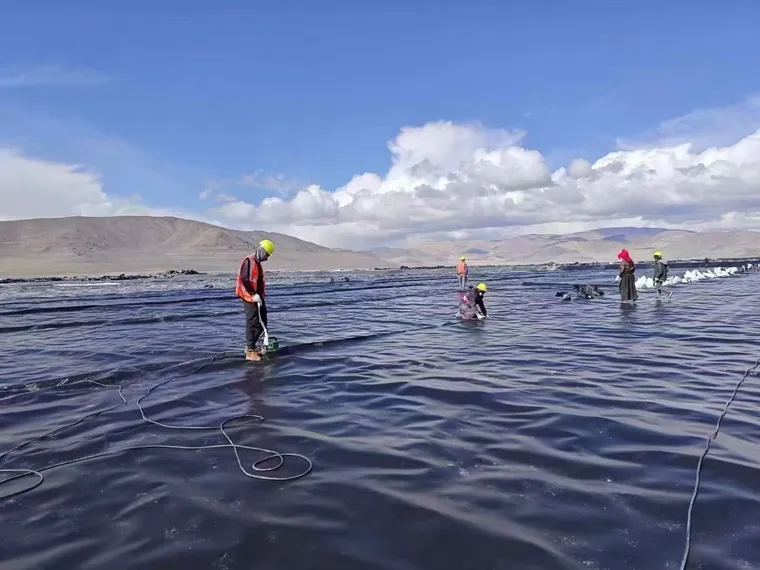
Panels being laid across a reservoir