GB/T 17638 · 100–800 gsm · to 25 kN/m
Nonwoven Geotextile
Needle-punched staple fiber fabric to GB/T 17638, from 100 to 800 gsm, for separation and filtration.
 Wanlihe
 Products
Applications
Guides
FAQ
Products
Applications
Guides
Standards
FAQ
Products
Applications
Guides
FAQ
Erosion control geotextile is used where water arrives faster than the ground can absorb it, and the soil leaves with it. On a slope or in a channel the loss is not gradual: once a rill forms it concentrates the flow, and the rill becomes a gully. The fabric holds the surface while vegetation establishes behind it.
Losing topsoil slowly is one thing. What actually happens on a slope is different.
Water running over bare ground finds the smallest irregularity and follows it. That path carries more water than the ground around it, so it deepens, and the deeper it gets the more it concentrates. By the time the erosion is visible it has stopped being surface loss and become a channel that will keep growing.
That is why erosion control is a surface problem rather than a volume problem. The fabric is not there to hold the whole slope; it is there to stop the first rill from forming.
A geotextile laid on the surface holds the soil in place while letting water through. It does not dam the flow, which would make matters worse, and it does not block the surface, which would stop anything growing.
It also adds tensile strength to the surface layer, which resists the deformation that precedes a failure. On a slope where the surface is the weak point, that is what keeps the shape until the vegetation takes over.
Slopes. Cut and fill faces, where the surface is exposed and the runoff has somewhere to go. Holding the surface while planting establishes is the usual arrangement.
Channels and ditches. Lined channels where the flow is concentrated by design, and the bed and banks have to resist it.
Reclamation and coastal work. Ground that is soft, exposed, and difficult to establish anything on. Our fabric is used in reclamation and coastal works for that reason.
The opening size has to suit the soil being held, because a fabric that retains sand will blind over on clay and one that passes clay will not hold sand.
Strength follows the slope and the flow, not the area. And the fiber itself matters in a buried or exposed application, which is why the material is chosen to resist corrosion, insects, and oxidation.
Where the slope needs to be held by something structural rather than protected at the surface, a geotextile is the wrong layer. It filters, separates, drains, and reinforces a layer. It does not retain a slope on its own, and a specification that treats it as though it does will not perform.
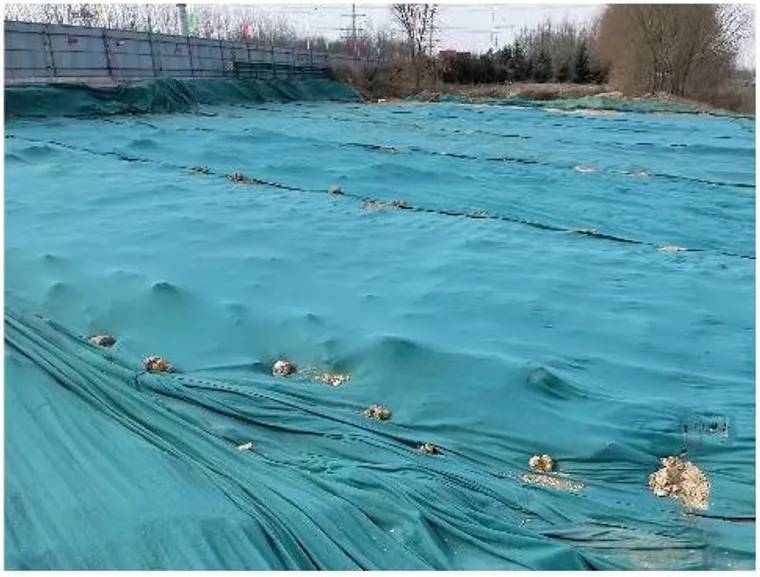
Fabric laid on site
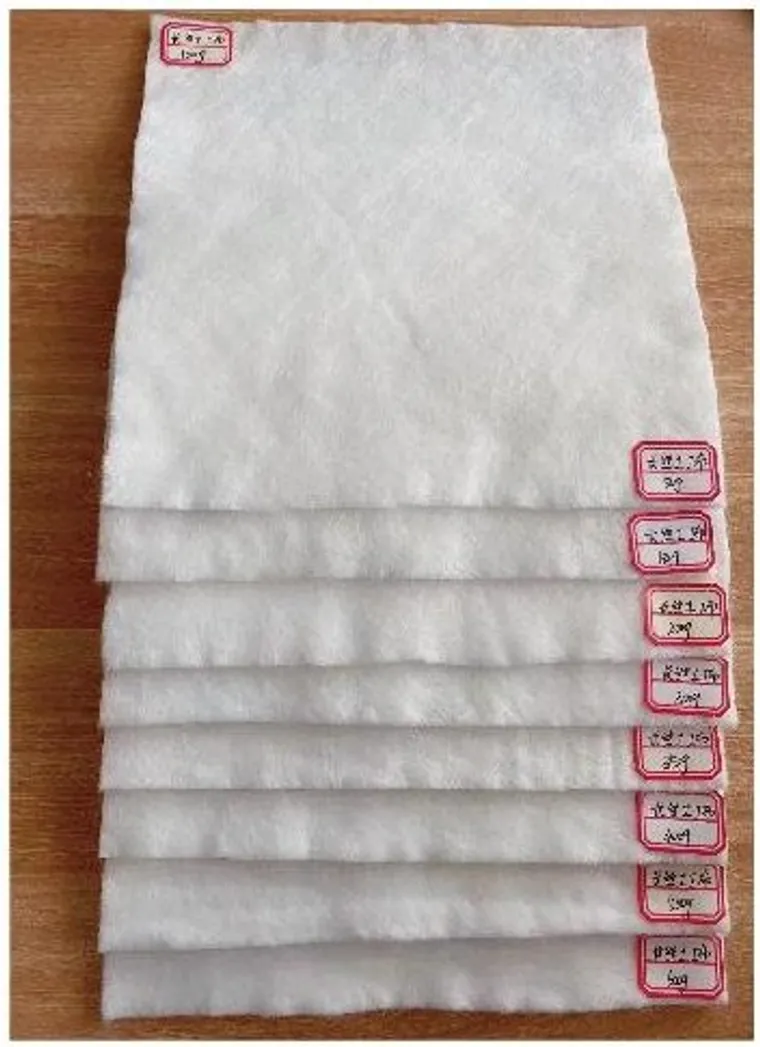
Fabric folded for dispatch
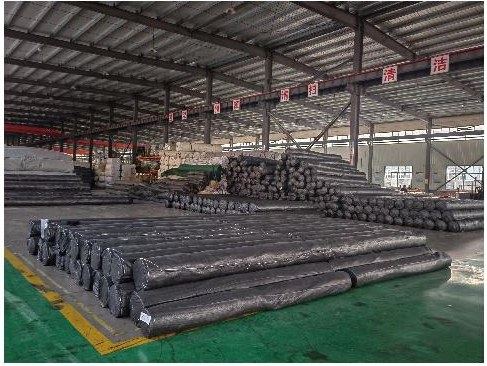
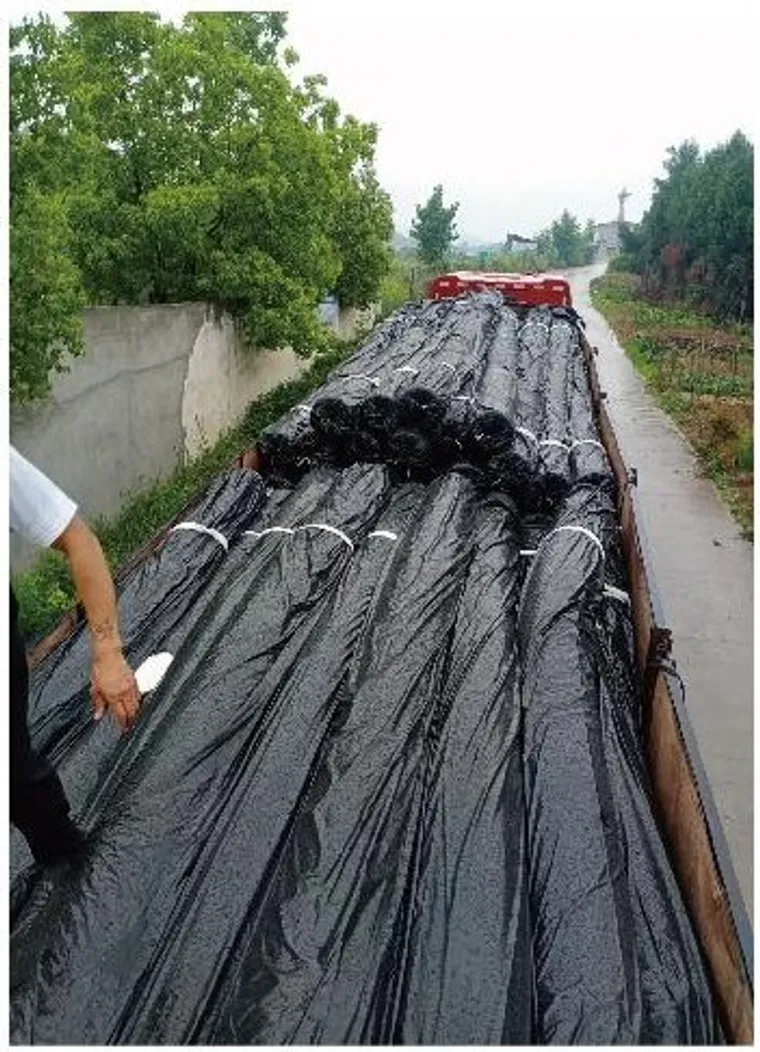
Rolls delivered
GB/T 17638 · 100–800 gsm · to 25 kN/m
Needle-punched staple fiber fabric to GB/T 17638, from 100 to 800 gsm, for separation and filtration.