HDPE · roll form · three variants
Drainage Board
Roll-form HDPE drainage board that drains only, plus the storage and double-sided variants for planted roofs and buried decks.
 Wanlihe
 Products
Applications
Guides
FAQ
Products
Applications
Guides
Standards
FAQ
Products
Applications
Guides
FAQ
Retaining wall drainage exists because water that collects behind the wall pushes against it. The wall is designed for soil, and pore water adds to that load in a way the structure may not have been sized for. A drainage board gives that water a path down the back of the wall, and it does it in a layer thin enough that the excavation does not have to grow to fit it.
A retaining wall is sized for the soil behind it. Water that collects in that soil is a second load, and it arrives without warning because it depends on rainfall and on how well the backfill drains. Giving the water a path down the back of the wall is cheaper than sizing the wall for saturated ground.
A granular layer does the same job, but it has to be placed, compacted, and separated from the backfill, and it takes up space. Space behind a wall is excavation, and excavation is the expensive part. A formed board does the job in a fraction of the thickness.
The board also keeps its voids under load, which is what a granular layer does not do. Backfill is placed and compacted against the board, and the board has to hold its shape through that.
Contact with the wall. The board only drains the water that reaches it, so it has to sit against the wall face rather than bridging across a void behind it.
The base drain. Water moved to the bottom of the board still has to leave. The board and the footing drain are one system, and designing one without the other moves the problem rather than solving it.
The top. Backfill placed from above can wash fines into the board. A separation layer over the top edge keeps the void open for the life of the wall.
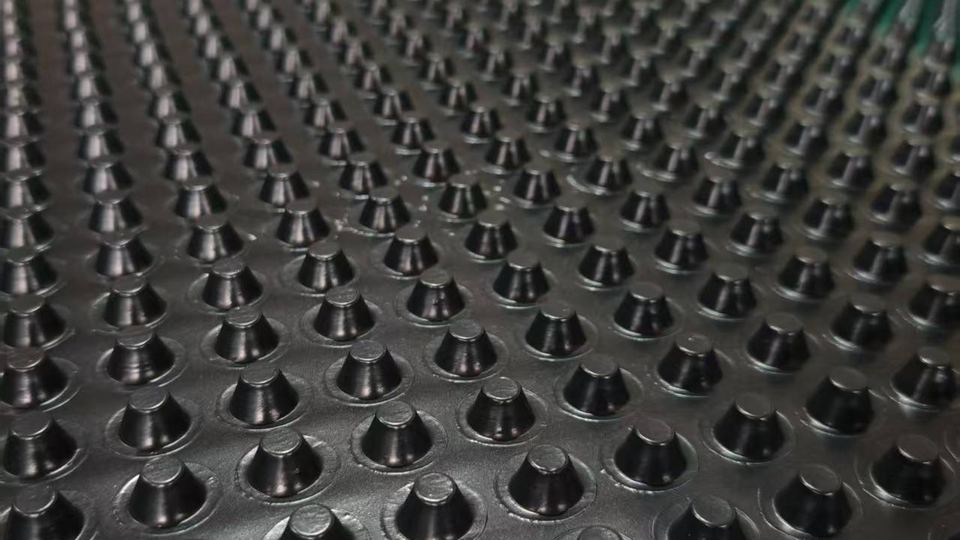
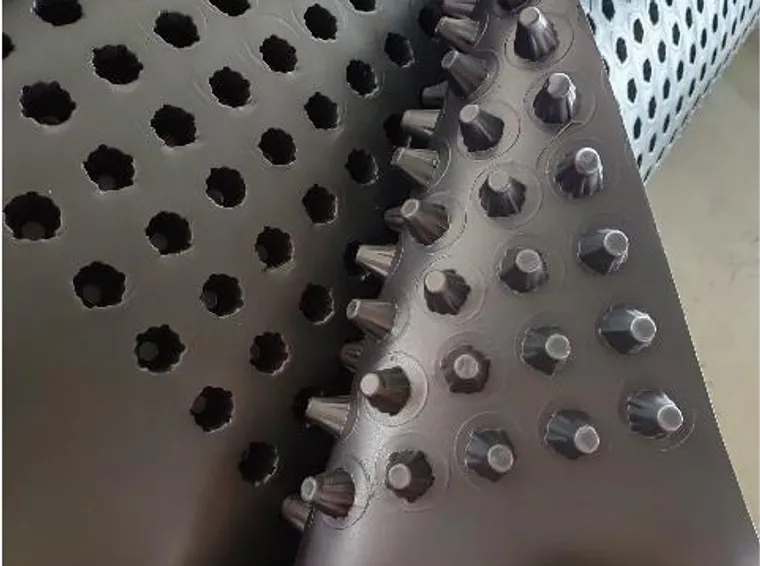
Board face
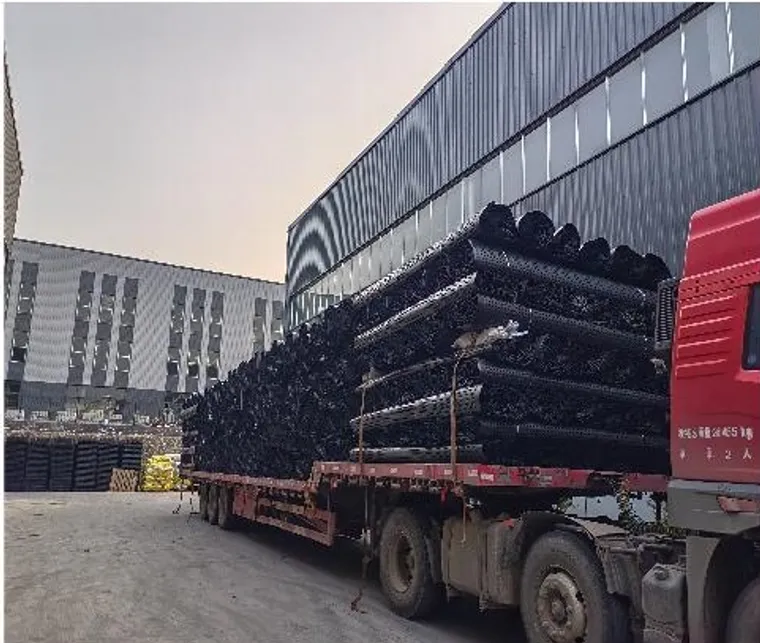
Rolls ready for dispatch
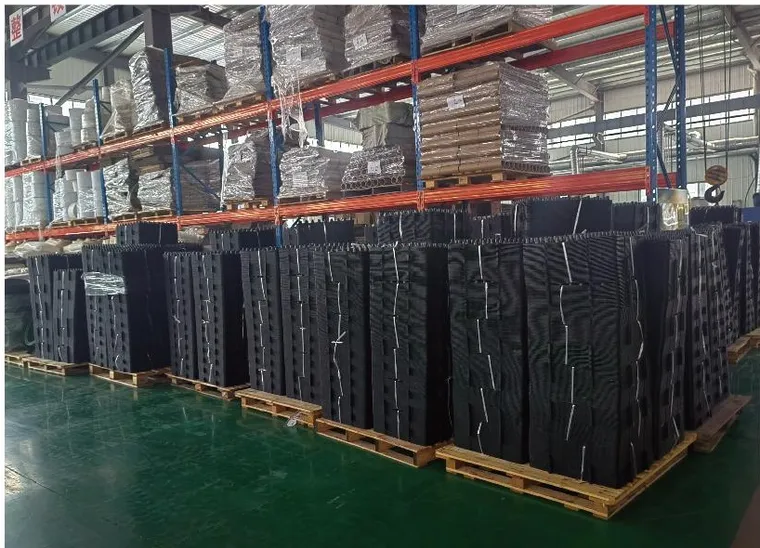
Board in stock
HDPE · roll form · three variants
Roll-form HDPE drainage board that drains only, plus the storage and double-sided variants for planted roofs and buried decks.