GRI GM13 for HDPE geomembranes
This page is about one published document: GRI-GM13. It describes what the specification covers, which test methods it refers to, and where its scope stops. It does not restate the values the standard sets, and it makes no claim about any product.
For the range this standard applies to, see Geomembranes for containment and lining.
The standard
What the standard covers
-
Manufacturing quality control
The specification represents manufacturing quality control. That means the checks a manufacturer carries out to show the sheet holds the properties the specification states. It is written for the factory, not for the construction site.
-
Test methods and frequency
It names the test method used for each property, and sets how often those tests are run during production. The table below lists the methods it refers to and what each one measures.
-
A starting point, not a complete answer
The specification says it is written for general applications. It also says a particular project may need more tests, or tighter values, than it sets. A sheet made to it is not automatically right for every site.
Test methods GRI-GM13 refers to
| Method | What it measures |
|---|---|
| ASTM D792 | Density and specific gravity of the compound |
| ASTM D1004 | Initial tear resistance of the sheet |
| ASTM D1238 | Melt flow rate of the compound |
| ASTM D1505 | Density by the density-gradient technique |
| ASTM D1603 | Carbon black content |
| ASTM D4218 | Carbon black content by the muffle-furnace technique |
| ASTM D4833 | Index puncture resistance |
| ASTM D5199 | Nominal thickness |
| ASTM D5397 | Stress crack resistance, by a single point notched constant tensile load test |
| ASTM D5596 | Dispersion of carbon black through the compound |
| ASTM D5721 | Oven aging of the sheet |
| ASTM D5885 | Oxidative induction time, by high-pressure differential scanning calorimetry |
| ASTM D5994 | Core thickness of a textured sheet |
| ASTM D6370 | Compositional analysis by thermogravimetry |
| ASTM D6693 | Tensile properties of the sheet |
| ASTM D7238 | Effect of exposure in a fluorescent UV condensation apparatus |
| ASTM D7466 | Asperity height of a textured surface |
| ASTM D8117 | Oxidative induction time, by differential scanning calorimetry |
| GRI GM10 | Stress crack resistance of geomembrane sheet |
| Method | What it measures |
|---|---|
| ASTM D792 | Density and specific gravity of the compound |
| ASTM D1004 | Initial tear resistance of the sheet |
| ASTM D1238 | Melt flow rate of the compound |
| ASTM D1505 | Density by the density-gradient technique |
| ASTM D1603 | Carbon black content |
Show all 19 rows
| Method | What it measures |
|---|---|
| ASTM D4218 | Carbon black content by the muffle-furnace technique |
| ASTM D4833 | Index puncture resistance |
| ASTM D5199 | Nominal thickness |
| ASTM D5397 | Stress crack resistance, by a single point notched constant tensile load test |
| ASTM D5596 | Dispersion of carbon black through the compound |
| ASTM D5721 | Oven aging of the sheet |
| ASTM D5885 | Oxidative induction time, by high-pressure differential scanning calorimetry |
| ASTM D5994 | Core thickness of a textured sheet |
| ASTM D6370 | Compositional analysis by thermogravimetry |
| ASTM D6693 | Tensile properties of the sheet |
| ASTM D7238 | Effect of exposure in a fluorescent UV condensation apparatus |
| ASTM D7466 | Asperity height of a textured surface |
| ASTM D8117 | Oxidative induction time, by differential scanning calorimetry |
| GRI GM10 | Stress crack resistance of geomembrane sheet |
Where the standard stops
-
The standard starts at 0.75 mm
GRI-GM13 applies to HDPE geomembranes in a thickness range that begins at 0.75 mm and runs to 3.0 mm, in both smooth and textured surfaces.
-
Our sheet runs thinner than that
We produce HDPE geomembrane from 0.25 mm to 3.0 mm. The bottom of our range sits below the bottom of the range GRI-GM13 covers. The thinnest sheet we make therefore sits outside the scope of this specification.
How to use it when you buy
-
Ask which thickness a report covers
A test report is issued for a particular thickness and a particular production run. When you ask a supplier for one, name the thickness you are buying and ask what the report was produced against.
-
Ask which method was used
For each property, ask which test method the figure came from. Two suppliers can quote the same property from different methods, and the numbers are then not comparable. The table above gives the methods this specification refers to.
-
Ask how often the tests are run
GRI-GM13 sets a testing frequency as well as a set of methods. Ask whether the supplier tests at that frequency, or only once at the start of a production campaign.
-
Ask where the values sit against the standard
This page does not restate the values the specification sets. The published document does, and it is the only place to check. Reading your supplier figures against it is a straightforward exercise.
Most buyers meet GRI-GM13 the same way. A specification arrives, or an engineer asks for a report, and the document is named without anyone saying what it is for. It is worth knowing before the enquiry goes out.
What the document is
GRI-GM13 is published by the Geosynthetic Institute and applies to high-density polyethylene sheet in both smooth and textured form.
Its reach is narrower than the title suggests. The document belongs to the factory rather than to the site, and a buyer who treats it as a site specification will be asking it a question it was never written to answer.
What you get from it, and what you do not
The value of the document is that it makes two sheets comparable. It names the test method used for each property and sets how often each test is run during production. Without that, one supplier can quote a density figure from one method and another from a different method, and the two numbers do not mean the same thing.
What the document cannot do is tell you anything about your own ground. The subgrade, the protection layer, and the seams fall outside it, and those are where lining work is usually lost. Independent guidance is explicit that a geomembrane is more susceptible to damage during installation than in service, and that is precisely the stage this specification does not reach.
So a sheet made to it is comparable with another sheet made to it. It is not thereby suitable for your site.
Why the boundary matters
The two thickness ranges should not be read as one. GRI-GM13 does not cover sheet thinner than 0.75 mm. A thinner sheet falls outside the standard’s scope; it has not been measured against it.
We also make sheet below that thickness, and we list it separately for that reason. If your design calls for a thickness inside the range the standard covers, the standard is the right document to specify against. If it calls for something thinner, say so plainly in the specification and expect the supplier to quote against that requirement instead.
Being clear about this costs a supplier very little and saves a buyer a great deal. A quotation that quietly implies a thin sheet meets a standard it sits outside is the kind of thing that only surfaces when the lining is already in the ground.
How a regulator uses it
The other half of the picture sits elsewhere. The Environment Agency’s landfill guidance reproduces manufacturing quality control tables from this standard in its appendix, which shows how a regulator uses it. The standard supplies the factory-side numbers; the guidance supplies the site-side rules around them.
Buyers who read both have the whole picture. Buyers who read only the standard have the half that is easiest to satisfy and least likely to be the reason a cell leaks.
Where to go next
Sources
This page describes a published standard. The description draws on the standard document itself and on the sources below.
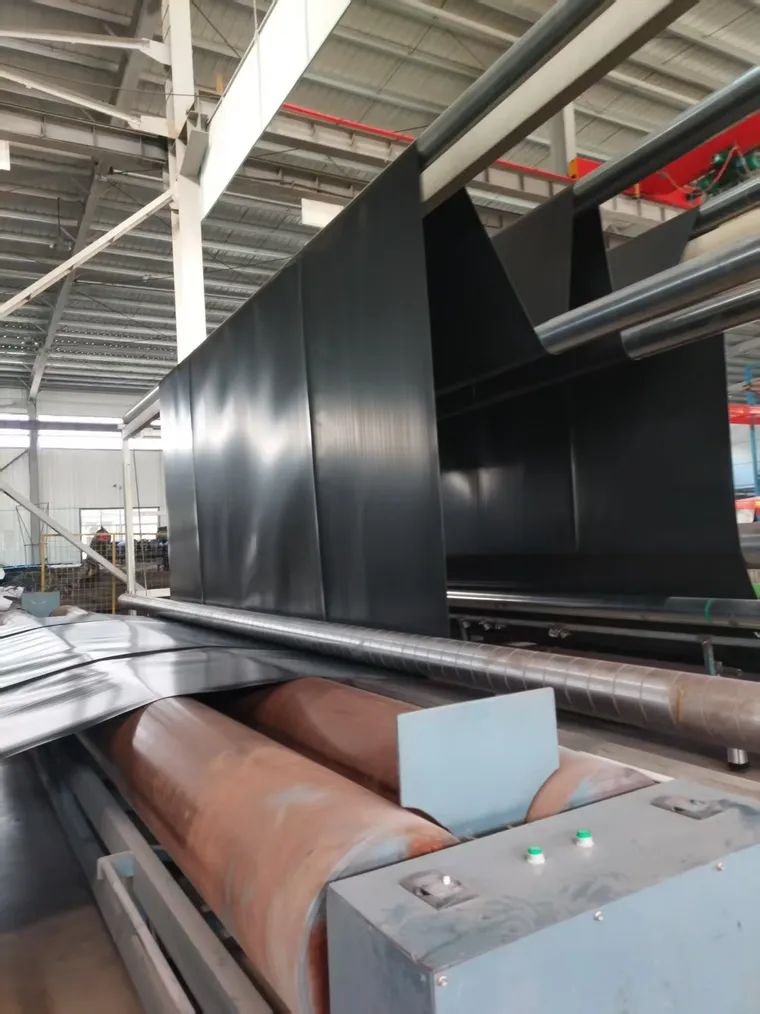
HDPE sheet as supplied
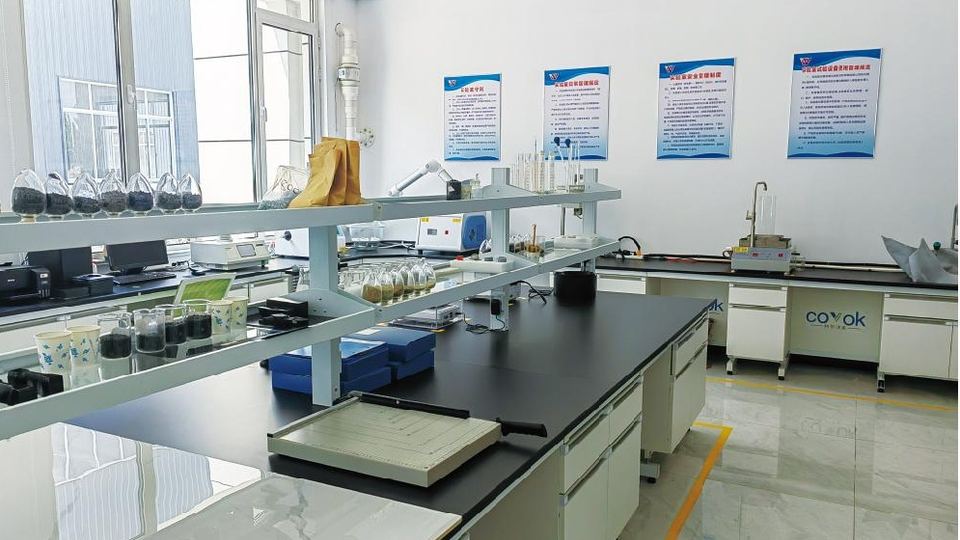
In-house laboratory bench