HDPE · 0.25–3.0 mm · 4–12 m
HDPE Geomembrane
Virgin polyethylene resin, three-layer co-extrusion, smooth or textured, in a wide thickness and roll width range.
 Wanlihe
 Products
Applications
Guides
FAQ
Products
Applications
Guides
Standards
FAQ
Products
Applications
Guides
FAQ
A geomembrane is a flexible polymeric sheet with very low permeability, and its job is to stop something moving from one place to another. We are geomembrane manufacturers, and the sheet is the part we make. Sometimes that something is water the site cannot afford to lose. Sometimes it is leachate the site is not allowed to release. The sheet is the barrier, and what decides whether it works is less the sheet than everything placed around it.
HDPE · 0.25–3.0 mm · 4–12 m
Virgin polyethylene resin, three-layer co-extrusion, smooth or textured, in a wide thickness and roll width range.
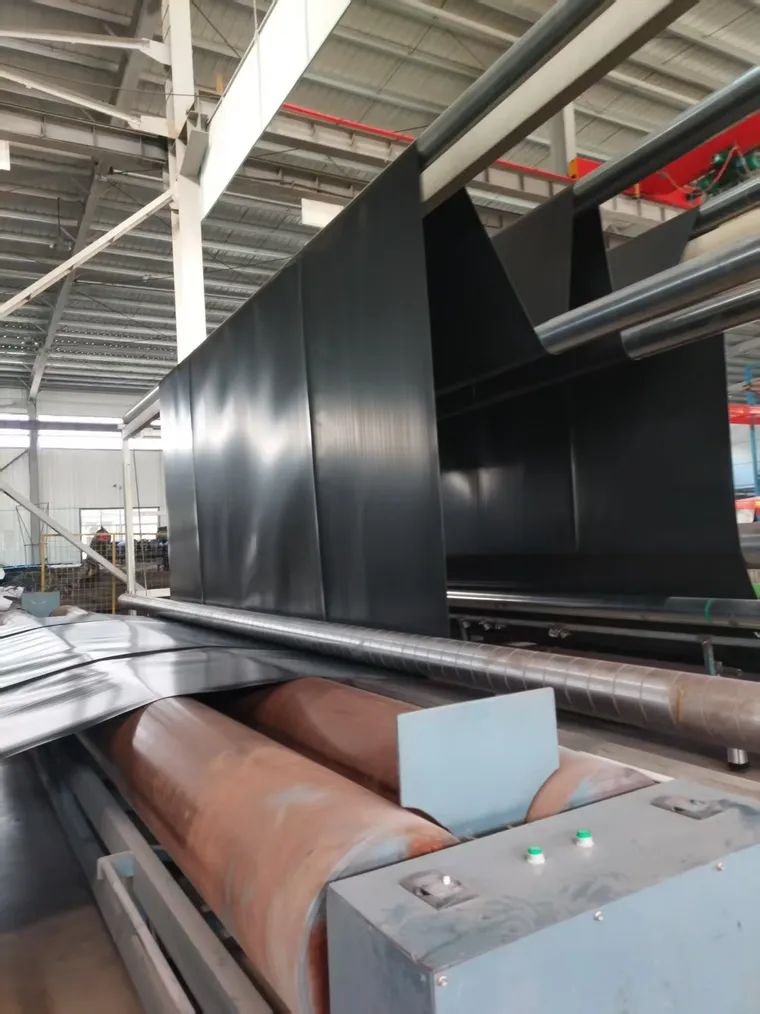
Finished HDPE roll
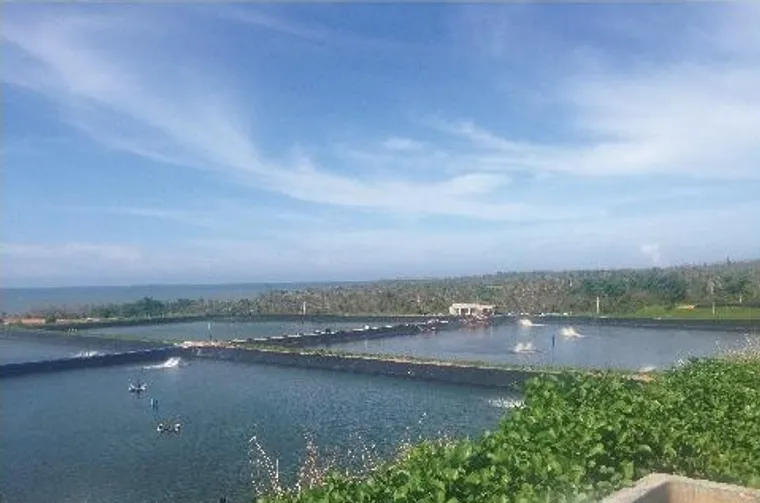
Panels being laid across a reservoir
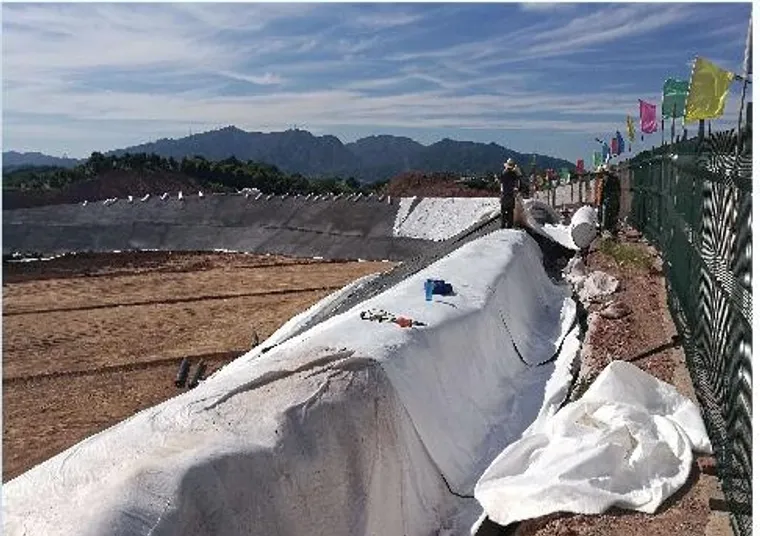
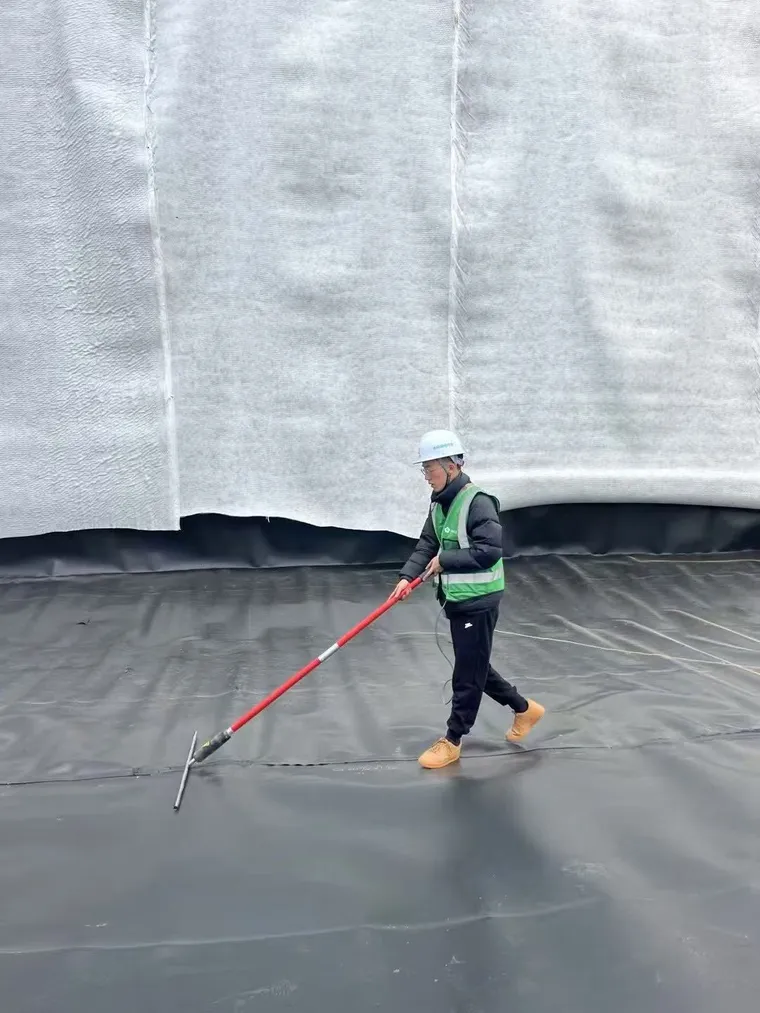
Lining under installation
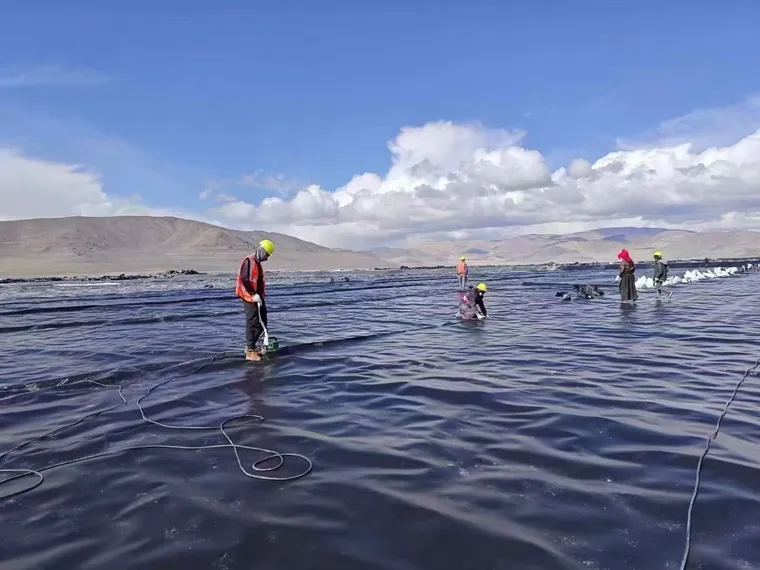
Seam being welded on site
Every lining job starts with the same question: what has to be kept apart from what?
In a landfill the answer is leachate and groundwater. Leachate forms when rainfall percolates through waste and draws chemical constituents out of it. The liner keeps that liquid away from the soil and groundwater beneath the cell.
In a mine the answer is often the opposite way round. The solution carrying dissolved metal is the product. The liner stops it draining into the ground before it can be recovered.
In a reservoir or a canal the answer is simpler. The water is the asset, and seepage is loss. Large water agencies have lined canals, dams and reservoirs with flexible geomembranes for exactly that reason.
Three different jobs, one sheet. What changes is the build-up around it.
The sheet itself is simple: panels joined by welding. Everything that decides whether it performs is around it.
In a landfill cell the membrane works as part of a pair: a compacted clay layer beneath it, and a collection system above. The clay is the backup. The collection system is how the liquid ever leaves the site.
A protection layer goes between the membrane and whatever is placed on it. The sheet is thin, and the stone, concrete or plant above it can puncture it if nothing separates the two. Geotextiles and fine-grained mineral layers both do that job. Which one is right depends on what goes on top and how heavy it is.
This is worth reading before the specification is fixed, because it is the part that surprises buyers.
Geomembranes resist seepage very well, and they are considerably more susceptible to damage during installation than in service. UK Environment Agency guidance on landfill engineering is direct about the consequence. No machine or truck may track directly on a geomembrane once it has been placed.
The same guidance sets out what has to be right underneath the sheet. The subgrade has to be free of sharp steps and large irregularities. There is a maximum particle size for the material in contact with the membrane. Panels have to be overlapped by a stated minimum before welding.
None of that is about the sheet. All of it decides whether the sheet still holds.
A lining job is checked in three places, and a buyer who knows the sequence knows what to ask for.
Before installation. Trial seams are made before work starts, and again at the start of each shift. They confirm the welding equipment suits the sheet and the conditions.
During installation. Welds run down a slope or sit on a flat base, and there are as few of them as the layout allows. Seams are checked twice: non-destructive testing along their length, and destructive testing of cut samples.
After installation. A geophysical leak location survey comes after the protection and drainage layers are placed over the membrane.
Installation is carried out by trained crews, and the welders hold an accredited welding qualification. Ask for that. It is the easiest thing to check before work starts.