HDPE · 0.25–3.0 mm · 4–12 m
HDPE Geomembrane
Virgin polyethylene resin, three-layer co-extrusion, smooth or textured, in a wide thickness and roll width range.
 Wanlihe
 Products
Applications
Guides
FAQ
Products
Applications
Guides
Standards
FAQ
Products
Applications
Guides
FAQ
A heap leach pad liner usually has a different driver from a landfill liner. In a heap leach operation the solution carrying dissolved metal is the product, and every liter that drains into the ground instead of being collected is revenue the operation never sees. The liner is there to stop that happening, and it has to survive the ore, the equipment, and the slope it is laid on.
On a heap leach pad the liner is not environmental protection bolted onto a mining operation. It is part of the process. Solution is applied to the ore, percolates through it, and is collected at the base carrying the metal that has been dissolved. Whatever escapes through the liner is lost from the recovery circuit.
That changes what the liner is judged on. On a landfill the question is whether anything leaves. On a leach pad the question is how much of the product can be accounted for.
A mining liner sees conditions a landfill liner often does not.
Chemical load. The solution being handled is aggressive by design, because dissolving metal is what it is for. Chemical compatibility between the liner and the solution is typically assessed before the liner is selected, and where the chemistry is unusual that assessment decides the material.
Mechanical load. Ore is placed on the liner, usually by heavy plant, and the liner has to survive it. A sealing liner generally has to be stable and durable, and to resist chemical attack, puncture, and rupture.
Slope stability. Pads are built on grades, and the liner is one of the interfaces the slope stability calculation depends on. Interface shear strength is typically tested for each soil-to-geosynthetic and geosynthetic-to-geosynthetic contact in a lining system, and on a leach pad there are several.
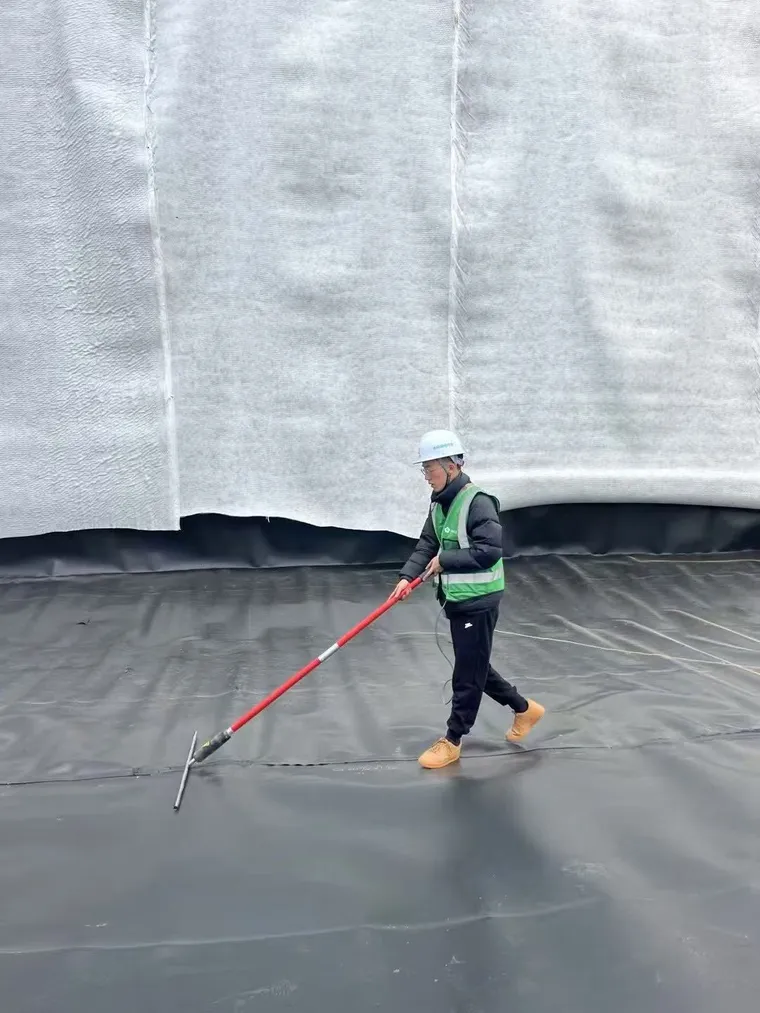
A geomembrane is typically protected against puncture, ultraviolet degradation, and localized stress concentrations, and the protection is a designed layer rather than a precaution.
Geotextiles and fine-grained mineral layers are both generally used for it. Which one is right depends on what is placed on top, and guidance for landfill work gives typical thicknesses for each that are a useful starting point on mining jobs where the loading is similar.
The same installation discipline applies. Geomembranes resist seepage well and are more susceptible to damage during installation than in service. On a leach pad the plant that places the ore is the plant most likely to do that damage.
The same three documents as any lining job: the welders’ qualification records, the trial seam results, and the leak location survey report taken after the layers above were placed.
Add one more. Ask for the interface shear testing that covers the actual contacts in the build-up, because that is the number the slope stability calculation rests on, and it is specific to the materials on your site rather than to the liner alone.
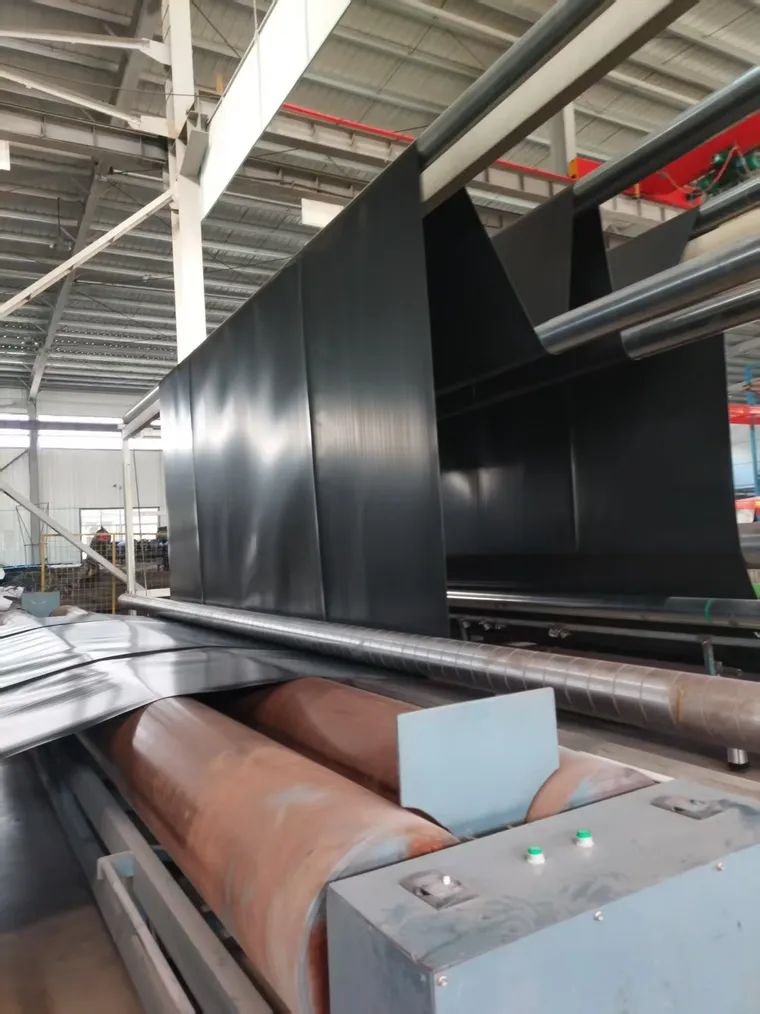
HDPE sheet as supplied
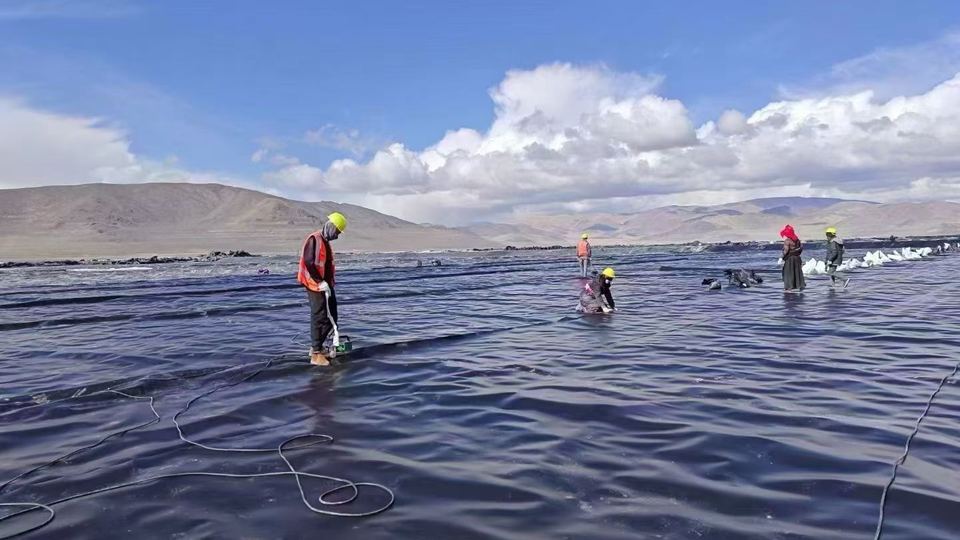
Seam being welded on site
HDPE · 0.25–3.0 mm · 4–12 m
Virgin polyethylene resin, three-layer co-extrusion, smooth or textured, in a wide thickness and roll width range.