GB/T 17638 · 100–800 gsm · to 25 kN/m
Nonwoven Geotextile
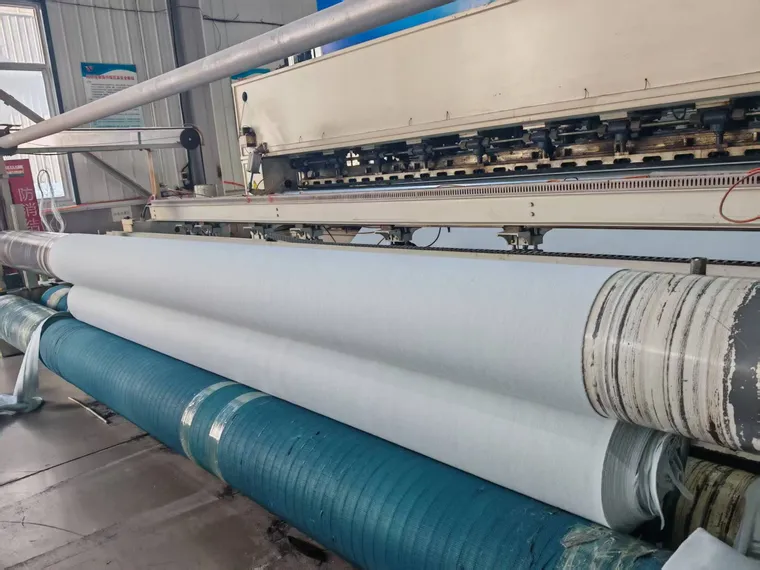
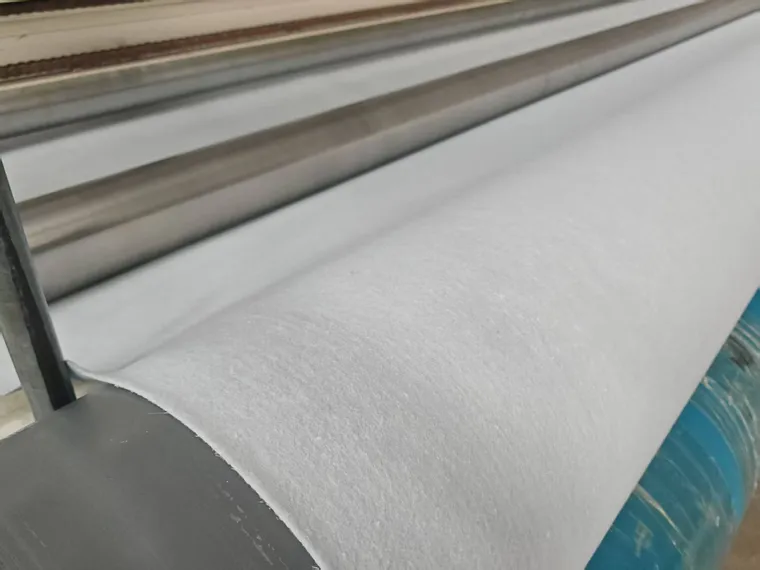
Needle-punched staple fiber fabric to GB/T 17638, from 100 to 800 gsm, for separation and filtration.
 Wanlihe
 Products
Applications
Guides
FAQ
Products
Applications
Guides
Standards
FAQ
Products
Applications
Guides
FAQ
We are geotextile manufacturers, and the fabric is the part we make. A geotextile is a permeable sheet that does several jobs at once: it keeps two layers of ground apart, it filters what passes between them, and it lets water through in its own plane. Which of those matters most depends on the job. The fabric is chosen for that, not for a grade label.
GB/T 17638 · 100–800 gsm · to 25 kN/m
Needle-punched staple fiber fabric to GB/T 17638, from 100 to 800 gsm, for separation and filtration.
GB/T 17639 · 100–800 gsm · to 40 kN/m
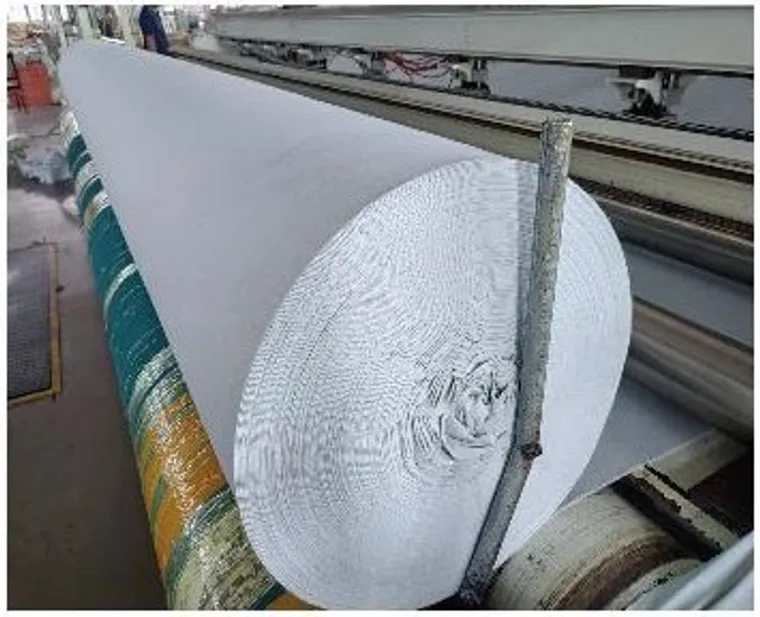
Needle-punched continuous filament fabric to GB/T 17639, from 100 to 800 gsm, with more strength at the same weight.
Fabric as produced
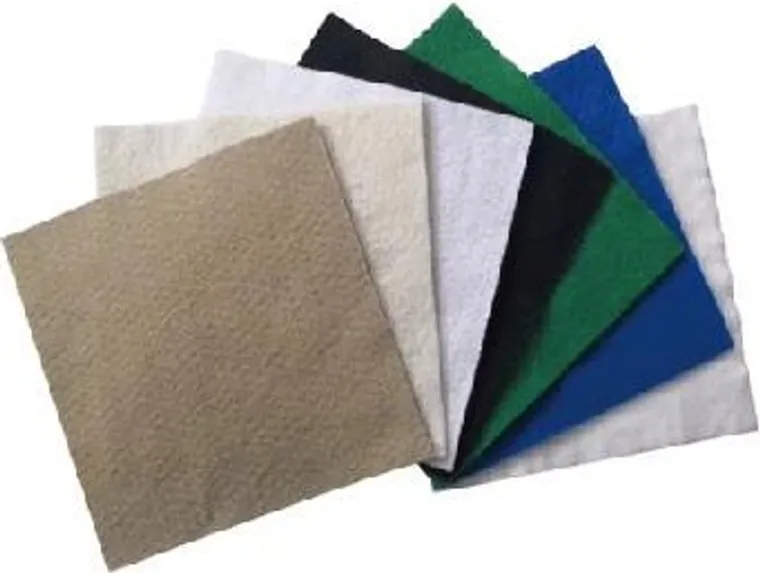
Fabric samples
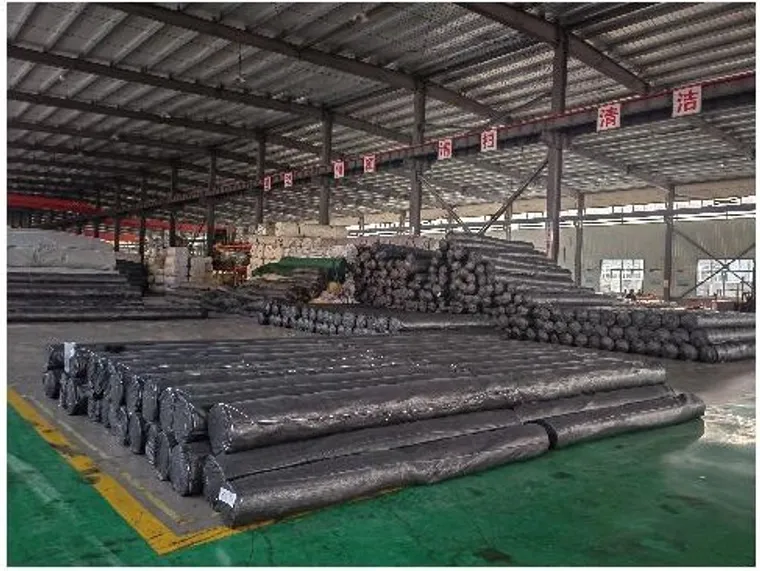
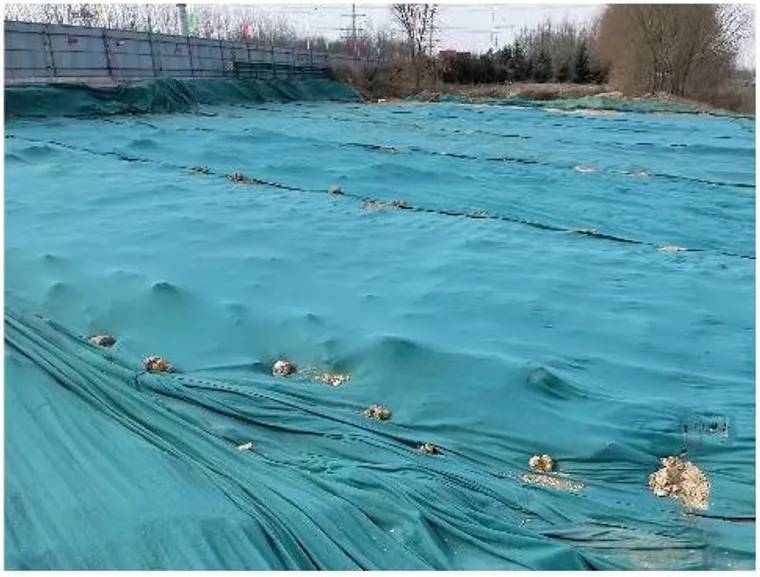
Fabric laid on site
Every geotextile job comes down to the same arrangement: two materials that should not mix, and water that has to move between them anyway. A layer of soil over a drainage stone, a road sub-base over soft ground, a slope that must not wash out.
Put nothing between them and the fines migrate into the voids, the drainage stops working, and the structure settles. Put a geotextile between them and the water still passes while the particles do not. That is the whole idea, and the rest is detail.
The same roll is specified for four different functions, and most real jobs involve more than one of them.
Separation. The fabric keeps sand, gravel, soil, and concrete from mixing into each other. This is the most common reason a geotextile appears on a drawing.
Filtration. It intercepts the fines that would otherwise wash out, while letting water through. The openings are sized so they resist clogging rather than filling up.
Drainage. The fabric conducts water in its own plane, discharging excess liquid and gas out of the soil structure.
Reinforcement. It adds tensile strength and resistance to deformation, which is what stabilizes the structure above it.
The range has two needle-punched fabrics, and they differ in how the fiber is made rather than in what they do.
Staple fiber fabric, made to GB/T 17638, is the lighter-duty of the two, with breaking strength from 2.5 to 25.0 kN/m.
Continuous filament fabric, made to GB/T 17639, runs across the same weights but carries more strength at each of them: 4.5 to 40.0 kN/m, with a higher puncture resistance as well.
That difference is the reason to specify one over the other. Where the design is tight on strength, the continuous filament fabric reaches it at a lower mass, which means less material to buy and less weight to handle.
A geotextile is permeable by definition. It will not hold water, and it is not a barrier. Where the job needs containment rather than filtration, the layer is a geomembrane, and the two are often used together: the membrane does the containing and the fabric protects it.
Being clear about that at the specification stage saves a conversation later.
Three things decide the fabric. The function it has to perform, since separation, filtration, drainage, and reinforcement do not call for the same properties. The strength the design needs, which sets the mass per unit area rather than the other way round. And the ground it goes against, because the openings have to suit the particle sizes on both sides of it.