How to choose a drainage board
A drainage board is a layer in a build-up, so the choice is made by the layers around it rather than by the board alone. Four questions narrow the field: what the board has to drain, what load it carries once the layers above are placed, how much height the build-up allows, and where the water leaves. Answer those in order and the form of the board follows.
For the range this guide belongs to, see Drainage boards for roofs, walls and subgrades.
What decides the choice
- What the board has to drain
- The area being drained and the rainfall the site is designed for set the flow the board has to pass. A board specified for a small area will not serve a large one whatever its profile.
- What the board has to carry
- Soil, gravel, and a topping slab all load the board. The load is heaviest when the layer is saturated, which is also when drainage matters most.
- How much height the build-up allows
- Above a buried slab the levels are usually fixed, so each layer competes for the same space. A board takes far less height than a granular layer doing the same job.
- Where the water leaves
- The outlet, the upstand, and the overlap between panels decide whether the board performs as it did on paper. Drainage is a system, not a product.
Board forms
| Form | What it is for | Where it is used |
|---|---|---|
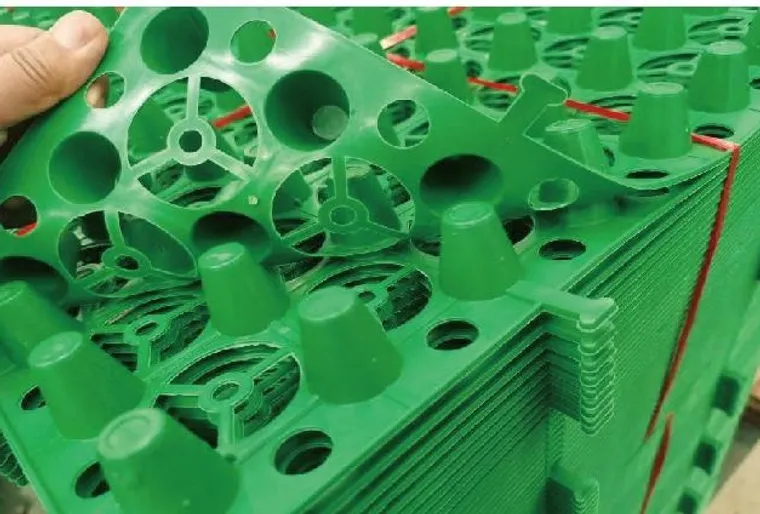
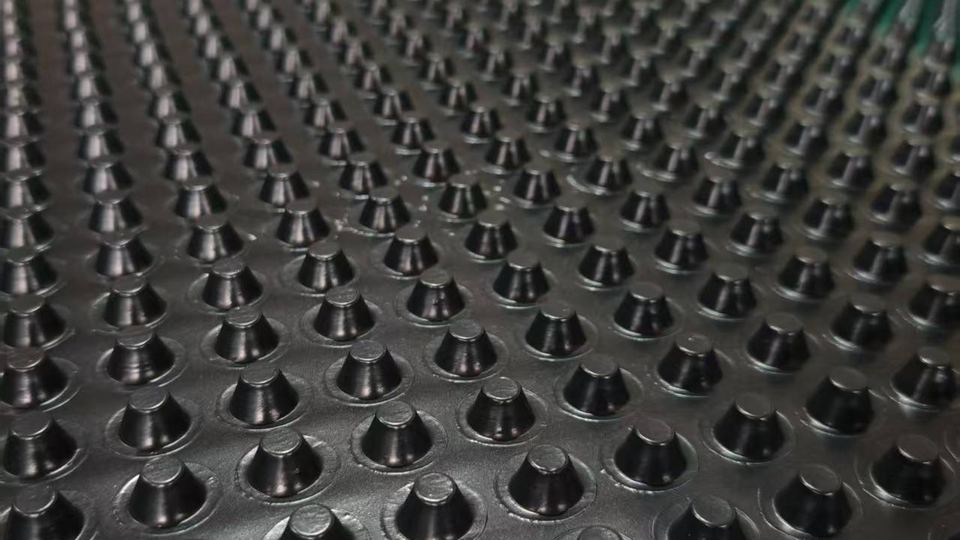
| Dimpled board | A shallow core that passes water along the drainage path | Roofs, walls and subgrades where the board only has to drain |
| Storage and drainage board | A deeper core that holds a volume of water and releases it slowly | Planted roofs, where the stored volume carries the planting between rainfalls |
| Double-sided board | Supports above and below, so one layer drains, insulates, and separates | Buried decks and podium roofs where the build-up height is fixed |
-
Dimpled board
- What it is for
- A shallow core that passes water along the drainage path
- Where it is used
- Roofs, walls and subgrades where the board only has to drain
-
Storage and drainage board
- What it is for
- A deeper core that holds a volume of water and releases it slowly
- Where it is used
- Planted roofs, where the stored volume carries the planting between rainfalls
-
Double-sided board
- What it is for
- Supports above and below, so one layer drains, insulates, and separates
- Where it is used
- Buried decks and podium roofs where the build-up height is fixed
Board or granular layer
| Layer | What it gives | What it costs |
|---|---|---|
| Formed board | Voids come from the shape, so they survive being loaded | A thin layer, placed as panels |
| Granular layer | Voids come from how the aggregate was packed | Depth, weight, and the placing work that goes with them |
-
Formed board
- What it gives
- Voids come from the shape, so they survive being loaded
- What it costs
- A thin layer, placed as panels
-
Granular layer
- What it gives
- Voids come from how the aggregate was packed
- What it costs
- Depth, weight, and the placing work that goes with them
How to work through it
-
Fix the build-up first
Decide what sits above the board and what sits below it before looking at board profiles. The layers around the board set the constraints.
-
Then the load
Work out what the layers above weigh when saturated. That figure, not the dry weight, is what the board has to hold.
-
Then the outlet
Size the outlet for the area being drained, and detail the edge so the growing medium cannot wash into the board.
-
Then the board
With those three answered the form follows: dimpled where the board only drains, storage where it must also hold water, double-sided where height is tight.
Mistakes to avoid
-
Choosing the thinnest board that fits
Height is the usual pressure on a build-up, and the drainage layer is the easiest one to squeeze. A board that flattens has not failed visibly, but it has stopped draining.
-
Designing the board without the outlet
A board that drains well into a blocked outlet behaves like no board at all. The outlet and the board are one system.
-
Leaving out the separation layer
Without a filter above it the void fills with fines over time, and the drainage path closes from the top down.
A drainage board is bought as a product but specified as a layer. That difference is where most of the difficulty sits, because the board on its own cannot be right or wrong — only the build-up it belongs to can.
Why the compressive figure matters as much as the flow
Flow is the property buyers ask about, and it is the easier one to quote. The compressive figure is the one that decides whether the flow survives installation. Soil placed and compacted on a board is what closes the voids, and it does so without any visible sign.
Why the outlet is part of the board
Drainage needs somewhere to go. An outlet sized for the drained area, an edge detail that keeps the growing medium out of the board, and a continuous path between panels are all part of the same system. Specifying the board and leaving the outlet to site is how a good board ends up performing badly.
Where to go next
Board profile
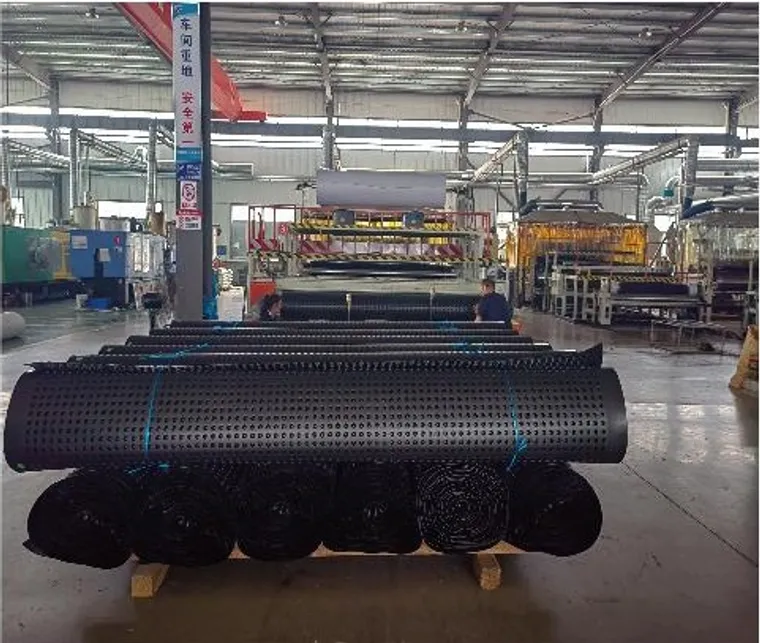
Board in roll form