HDPE · 0.25–3.0 mm · 4–12 m
HDPE Geomembrane
Virgin polyethylene resin, three-layer co-extrusion, smooth or textured, in a wide thickness and roll width range.
 Wanlihe
 Products
Applications
Guides
FAQ
Products
Applications
Guides
Standards
FAQ
Products
Applications
Guides
FAQ
Landfill liners exist because waste and water do not stay separate. Rain that percolates through a cell draws chemical constituents out of the waste, and the liquid it produces has to be kept out of the ground beneath. Modern containment sites are generally engineered and monitored so that contaminants stay out of the surrounding environment, and the liner is the layer that does the containing.
Leachate generally forms when rainfall percolates through waste and draws chemical constituents out of it. The volume depends on how much rain gets in, which is why a cell is capped and drained as well as lined.
The liner’s purpose is simple to state. It keeps that liquid away from the groundwater and the soil beneath the cell. Everything else in the build-up exists to help it do that, or to deal with the liquid once it has been collected.
The composite liner. A composite liner typically pairs a geomembrane with a compacted clay layer to line the base and sides of the cell. The two work together: the membrane is the barrier, and the clay is the backup and the bedding.
The collection system. A leachate collection system typically sits above the liner and carries leachate away for treatment and disposal. The cell base is generally graded so that liquid drains to a collection sump at a low point. A liner with no way to get the liquid off it fills up.
The protection layer. Something has to sit between the membrane and the drainage stone above it. Geotextiles and fine-grained mineral layers are both generally used for that, and guidance gives typical thicknesses for each.
The subgrade. Guidance asks for a subgrade free of sharp steps and large irregularities, with a maximum particle size for the material in contact with the membrane. A liner laid on a rough base is a liner with a puncture waiting to happen.
UK Environment Agency guidance on landfill engineering makes the point that is worth carrying into any lining specification: geomembranes resist seepage very well, and they are considerably more susceptible to damage during installation than in service.
The consequence is stated plainly. No machine or truck may track directly on a geomembrane once it has been placed. The damage that matters on a landfill job is usually done before the waste arrives.
That is why so much of the specification is about installation rather than about the sheet. Trial seams before work starts and at the start of each shift. Welds laid down a slope or on a flat base, kept to a minimum. Seams checked by non-destructive testing along their length and by destructive testing of cut samples. A geophysical leak location survey after the protection and drainage layers go on.
Installation is generally carried out by trained personnel, and welders generally hold an accredited welding qualification. Ask for the qualification records, the trial seam results, and the survey report. Those three documents tell you more about whether the cell will hold than any datasheet does.
One more thing is worth settling early. Chemical compatibility between the liner and the waste, leachate, and gas it will meet is typically assessed before the liner is selected. Where the waste stream is unusual, that assessment decides the material rather than the price.
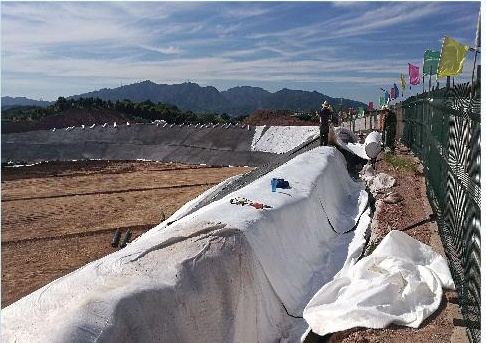
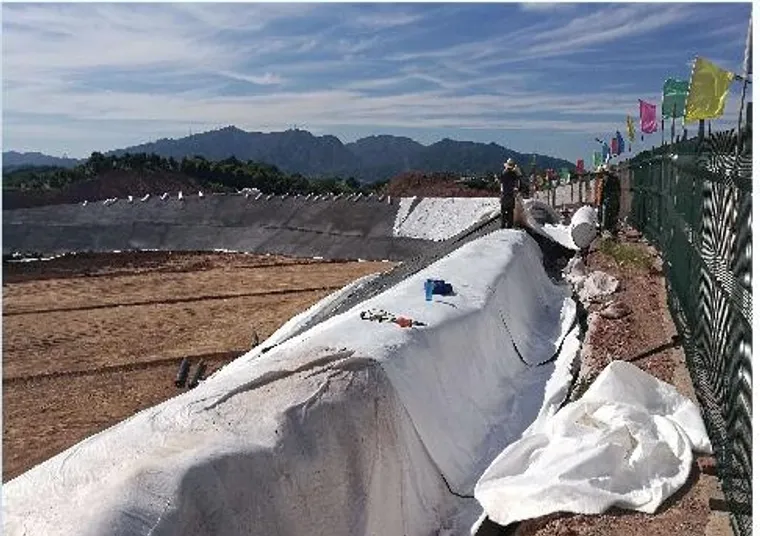
Cell lined under installation
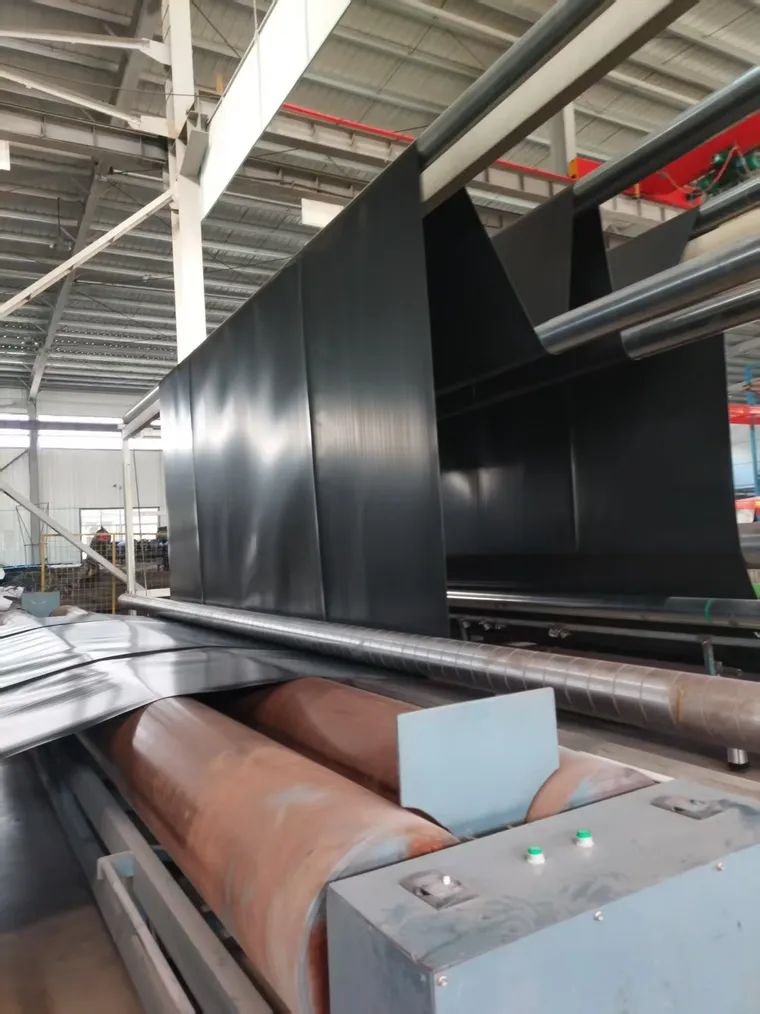
HDPE sheet as supplied
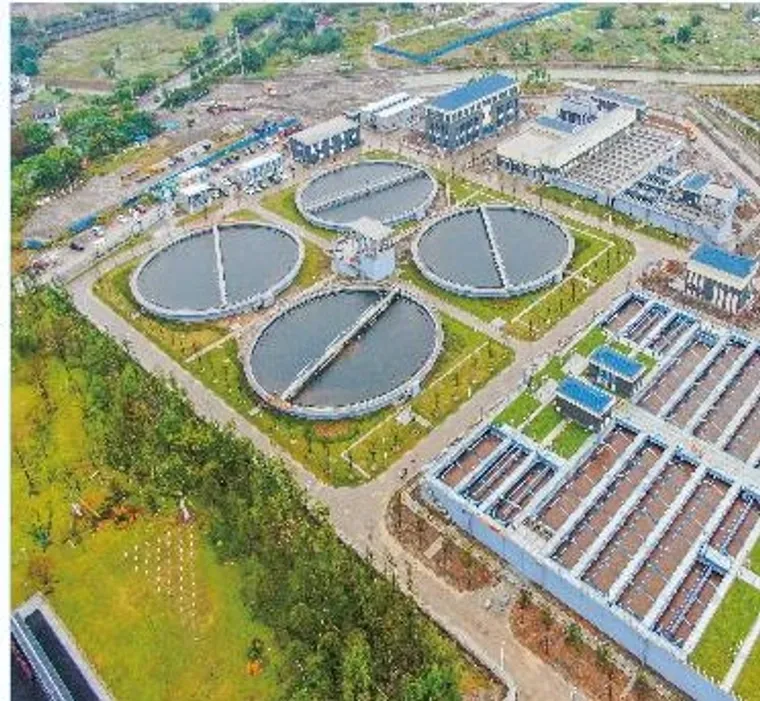
Landfill site, aerial view
HDPE · 0.25–3.0 mm · 4–12 m
Virgin polyethylene resin, three-layer co-extrusion, smooth or textured, in a wide thickness and roll width range.