HDPE · roll form · three variants
Drainage Board
Roll-form HDPE drainage board that drains only, plus the storage and double-sided variants for planted roofs and buried decks.
 Wanlihe
 Products
Applications
Guides
FAQ
Products
Applications
Guides
Standards
FAQ
Products
Applications
Guides
FAQ
We are drainage board manufacturers with three production lines of our own. A drainage board is a formed plastic core that carries water away from a surface while holding the layers above it apart, and it is made from high-density polyethylene by heating and pressing the sheet into a three-dimensional shape. We supply it in roll form, which is the form the board is usually bought in. Two variants sit alongside it: a storage board that also holds water, and a double-sided board for buried decks.
HDPE · roll form · three variants
Roll-form HDPE drainage board that drains only, plus the storage and double-sided variants for planted roofs and buried decks.
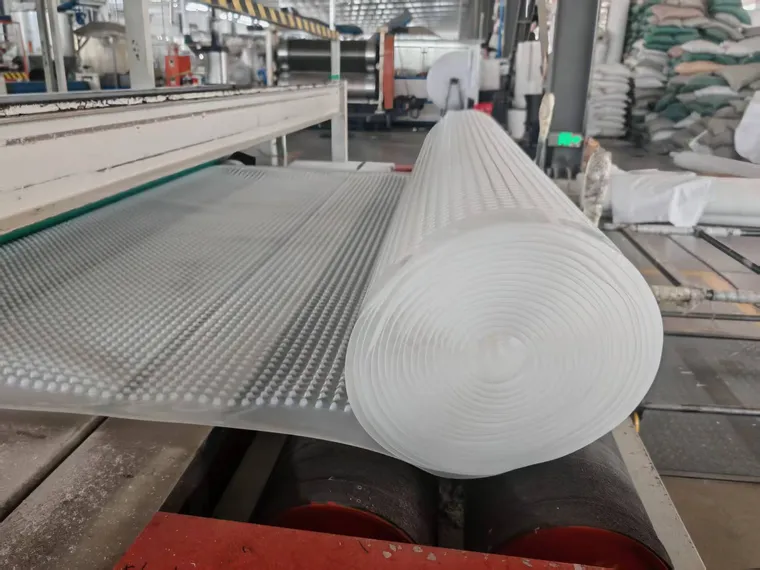
Board in roll form
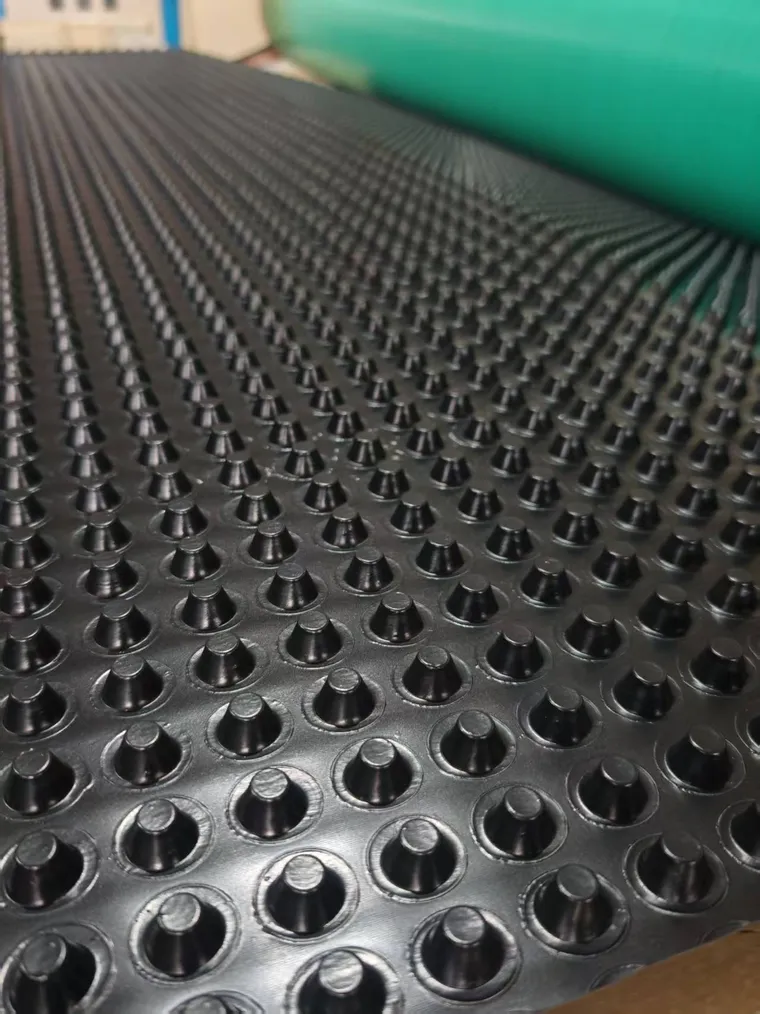
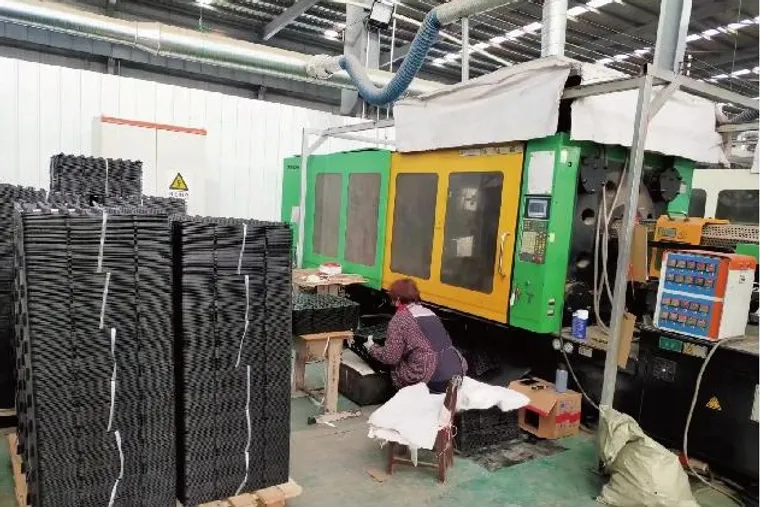
Forming line
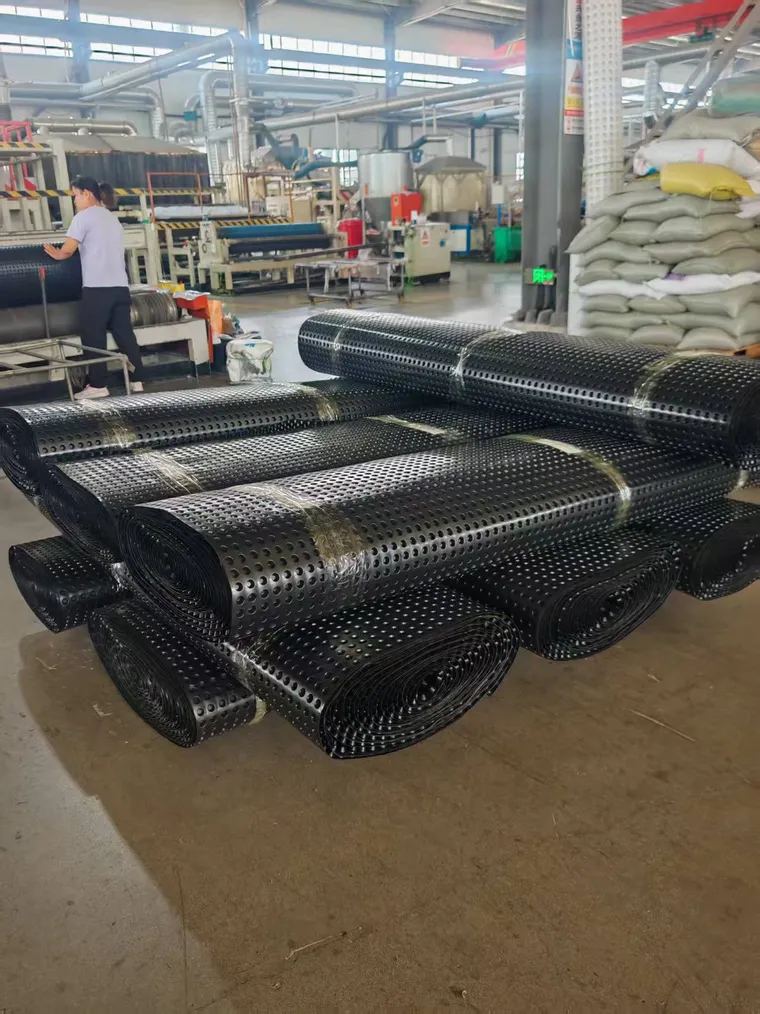
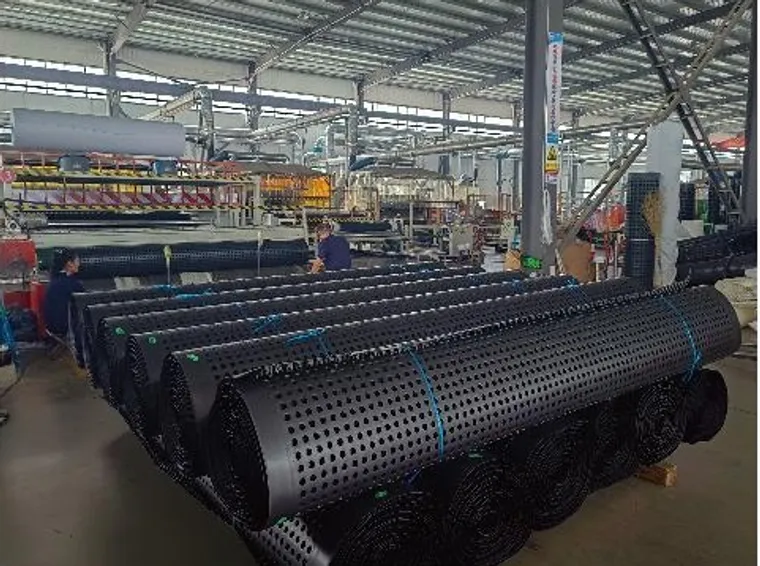
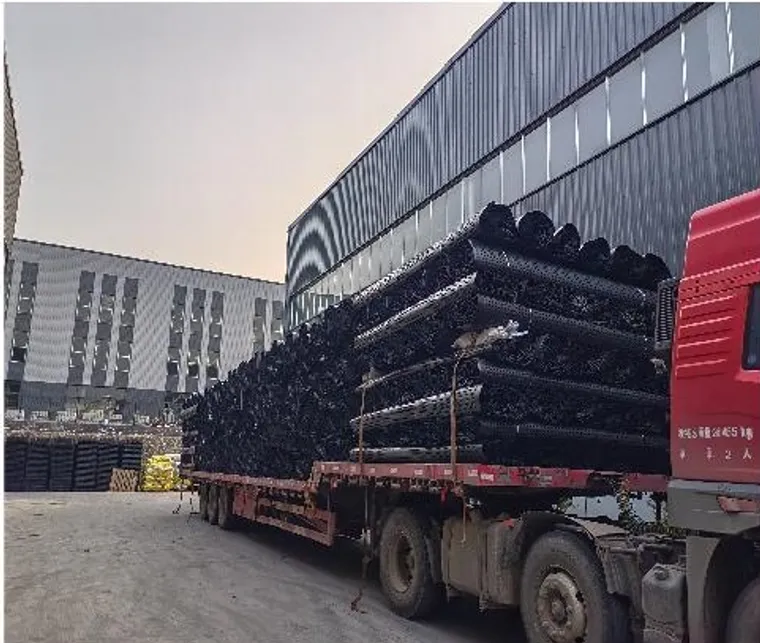
Rolls ready for dispatch
Water arriving at a wall, a deck, or a roof has to be taken away without being trapped against the structure. A granular drainage layer does that job, but it is heavy and it has to be carried up. A formed plastic board does the same job at a fraction of the weight, and it arrives as a roll that one person can carry.
The board does two things at once. Its dimples hold the layers above it apart, which leaves a void for water to travel through. The same shape gives the board its stiffness, so it keeps that void open while soil, gravel, or a topping slab is placed on top.
The board is bought in roll form, and that is the form we supply. The roll carries a dimpled face, and a mesh and a non-woven fabric are laminated onto it, so the same layer filters as well as drains. It is specified where water has to leave a structure and there is no reason to hold a volume back: retaining walls, basements, tunnels, slope protection, platforms, and highway roadbeds.
Two variants sit alongside it, and neither is interchangeable with the roll.
Storage and drainage board also holds water. Its cups are deeper, so it keeps a volume in the void and releases it slowly, which is what a planted roof needs when the planting has to survive between rainfalls. It is the variant for a roof, not for a wall.
Double-sided board is for buried decks and podium roofs, where several layers sit on top of each other and the build-up height is fixed. Its supports hold the slab and the layers above apart, so one board drains, insulates, and separates roots.
How much water has to move. The board is part of a build-up: a filter layer above it, the board itself, and a waterproof membrane below. The flow the board has to pass is set by the area it drains and the rainfall the site is designed for.
What load it has to carry. A green roof is backfilled with soil. A plaza deck is walked on. A retaining wall has soil pressing against it. Each of those sets a compressive load the board has to hold without the voids closing, because a board that flattens stops draining.
How it is detailed at the edges. Drainage only works if the water has somewhere to go. The outlet, the upstand at a wall, and the overlap between panels decide whether the board performs as it did in the specification.