HDPE · 0.25–3.0 mm · 4–12 m
HDPE Geomembrane
Virgin polyethylene resin, three-layer co-extrusion, smooth or textured, in a wide thickness and roll width range.
 Wanlihe
 Products
Applications
Guides
FAQ
Products
Applications
Guides
Standards
FAQ
Products
Applications
Guides
FAQ
A pond liner is usually about loss rather than pollution. Water that soaks away is water that has to be replaced, and on a reservoir, a canal, or an aquaculture pond that replacement is the running cost. Large water agencies have generally lined canals, dams, and reservoirs with flexible geomembranes for exactly this reason: to control seepage and conserve the water.
On a containment job the liner stops something bad getting out. On a pond or a reservoir it stops something valuable getting away. Those are different economics and they lead to different questions.
The first question is how much water is being lost now. Seepage through an unlined pond depends on the soil, and on some ground it is a large fraction of what the pond holds. The second question is what the replacement water costs, because that is what the liner is being bought against.
Where the answer to the second question is small, a liner may not be the right answer at all. It is worth saying so early rather than quoting for a job that does not need doing.
A lined pond is simpler than a landfill cell and the same principles apply.
The subgrade. Guidance for membrane work asks for a subgrade free of sharp steps and large irregularities. On a pond that usually means a prepared and compacted base, with any rock or hard object either removed or covered.
The protection. A lining system is generally protected against puncture and localized stress concentrations. Under a pond, the protection usually goes below the membrane, because the risk is what is in the ground rather than what is placed on top.
The membrane. Panels are generally welded, and the welding is checked the same way it is on any other lining job: trial seams first, non-destructive testing along the seam, and destructive testing on cut samples.
The survey. A geophysical leak location survey is typically carried out after the protection and drainage layers have been placed over the membrane. On a pond that is the last chance to find a defect before it is under water.
Ponds used for fish and for farm water storage have the same driver with an extra one. Water quality matters to what lives in the pond, and a liner also stops the pond interacting with the ground beneath it.
Where the pond is for stock or irrigation, the calculation is straightforward: the stored volume against the seepage loss against the cost of the liner. Where it is for aquaculture, the material also has to be suitable for contact with the water the stock lives in, and that is worth confirming rather than assuming.
The same documents as any lining job, plus one specific to ponds. Ask for the survey report, and ask when it was done relative to filling. A leak survey is only useful if it happens before the water goes in.
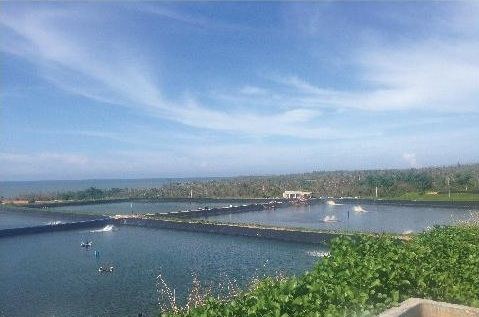
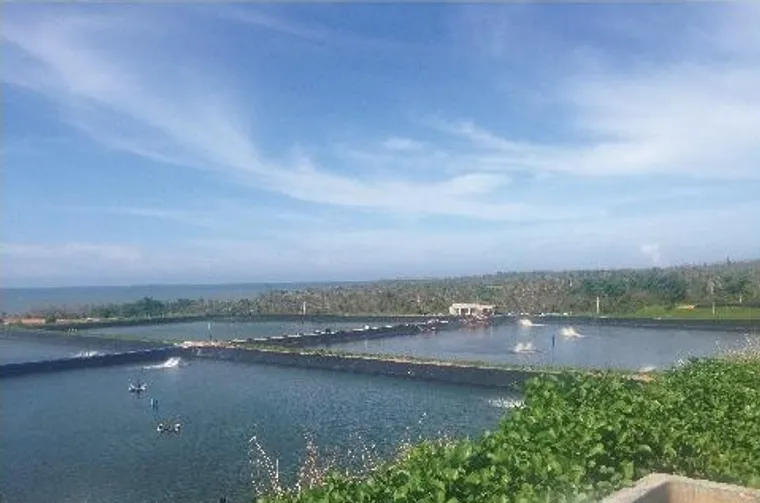
Pond lined and in service
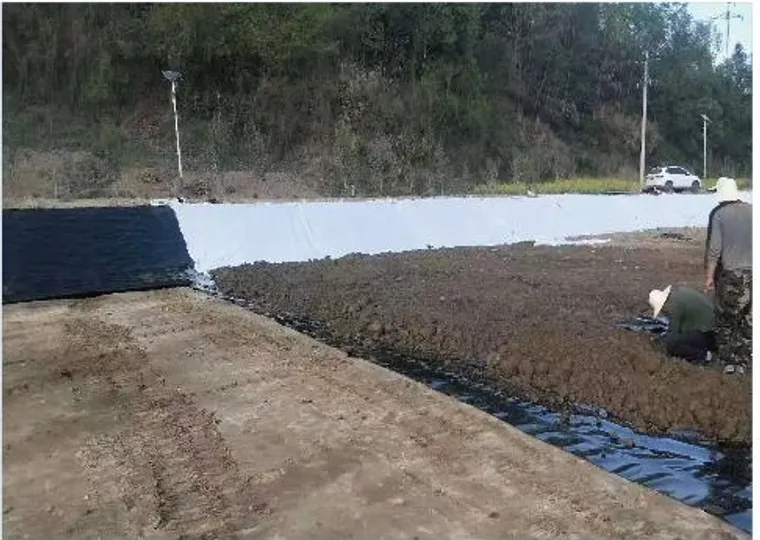
Lining being laid
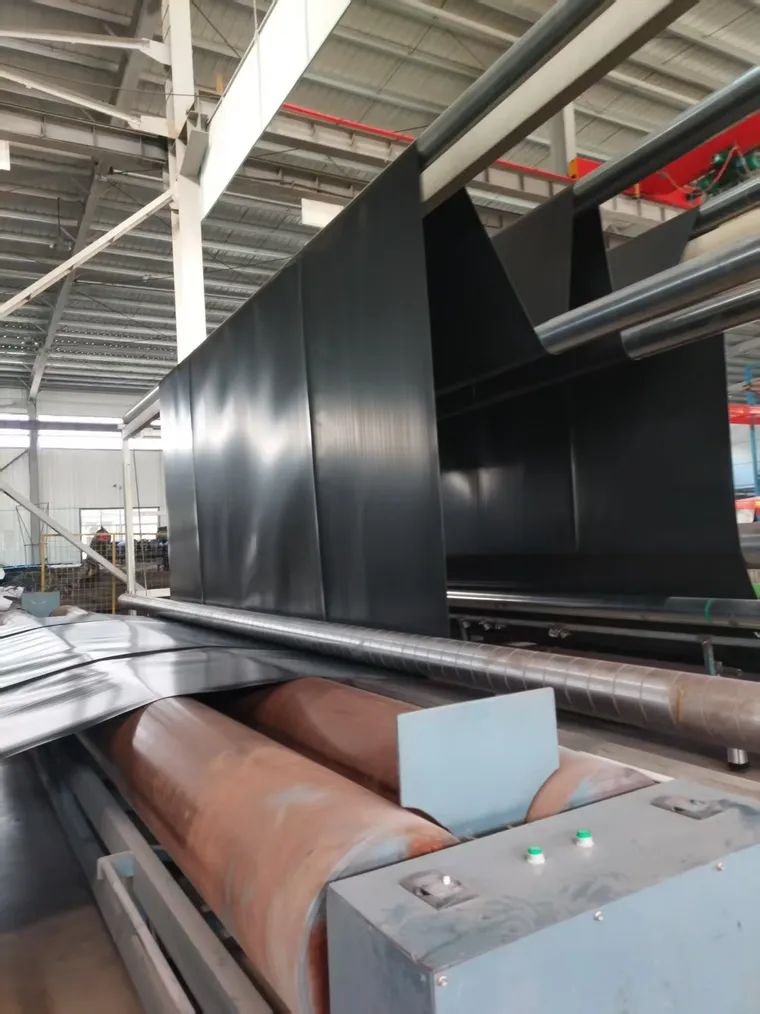
HDPE sheet as supplied
HDPE · 0.25–3.0 mm · 4–12 m
Virgin polyethylene resin, three-layer co-extrusion, smooth or textured, in a wide thickness and roll width range.