GB/T 17638 · 100–800 gsm · to 25 kN/m
Nonwoven Geotextile
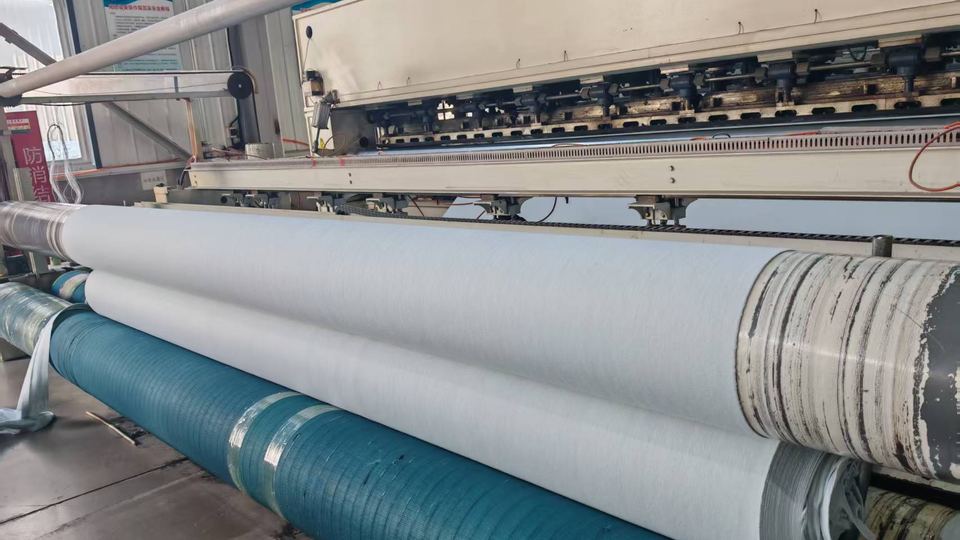
Needle-punched staple fiber fabric to GB/T 17638, from 100 to 800 gsm, for separation and filtration.
 Wanlihe
 Products
Applications
Guides
FAQ
Products
Applications
Guides
Standards
FAQ
Products
Applications
Guides
FAQ
Road stabilization geotextile answers a problem that shows up after the road is built. Aggregate placed on soft ground pushes down into it, the fines migrate up into the voids, and the layer that was meant to drain and carry load stops doing either. The road settles unevenly, and the repair costs more than the fabric would have.
Two mechanisms, and they reinforce each other.
The aggregate punches down into the soft ground, so the layer gets thinner and loses its ability to spread load. At the same time the fines below migrate upward into the aggregate, filling the voids that were the reason for using stone in the first place. The layer becomes neither a drain nor a load spreader, and it happens gradually enough that it is often put down to the ground rather than to the missing layer.
A geotextile between the two materials stops both. It keeps the aggregate out of the subgrade and the fines out of the aggregate, while letting water pass through instead of trapping it under the road.
It also carries tensile forces while the sub-base is being placed and compacted, which is when the ground beneath it is at its most disturbed. That is the reinforcement part of the job, and on soft ground it is often the reason the specified thickness can be built at all.
The design strength is the starting point, because it sets the mass per unit area. On soft ground that figure is usually driven by the tensile force the sub-base imposes rather than by the traffic on top.
Two other properties then have to suit the site. The opening size has to be right for the particle sizes on both sides, because a fabric that filters the subgrade but passes the aggregate fines is doing half a job. And the fabric has to survive installation, which is when most damage to it happens.
Both the staple fiber and the filament fabric will do this job. Where strength is the governing figure, the filament fabric reaches it at a lower mass, which on a road job measured in hectares is where the decision gets made.
The filter behavior does not change between them, so the choice can be made on strength and cost without reopening the filtration design.
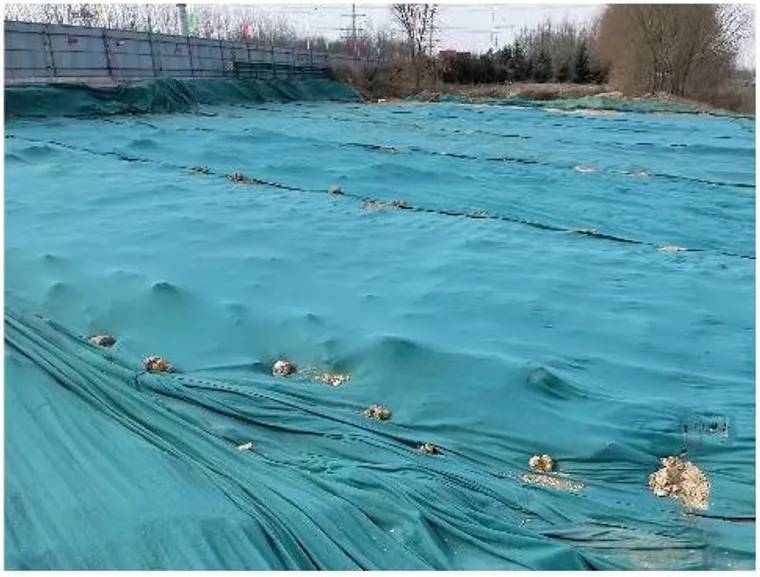
Fabric laid on site
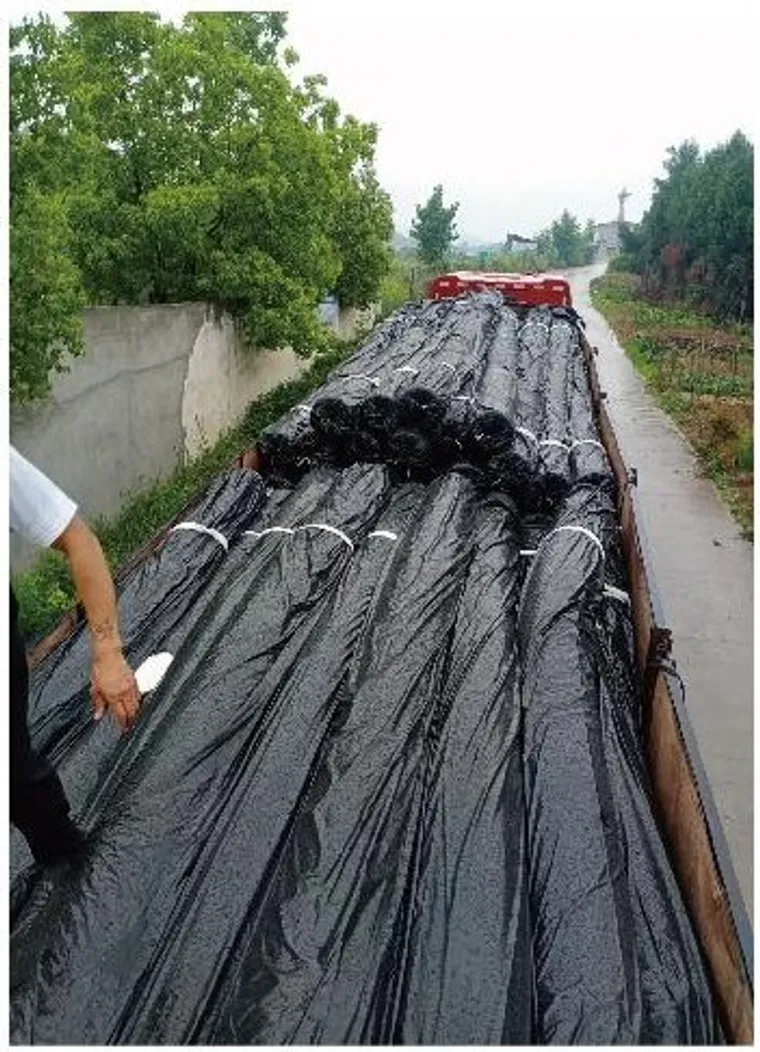
Rolls delivered
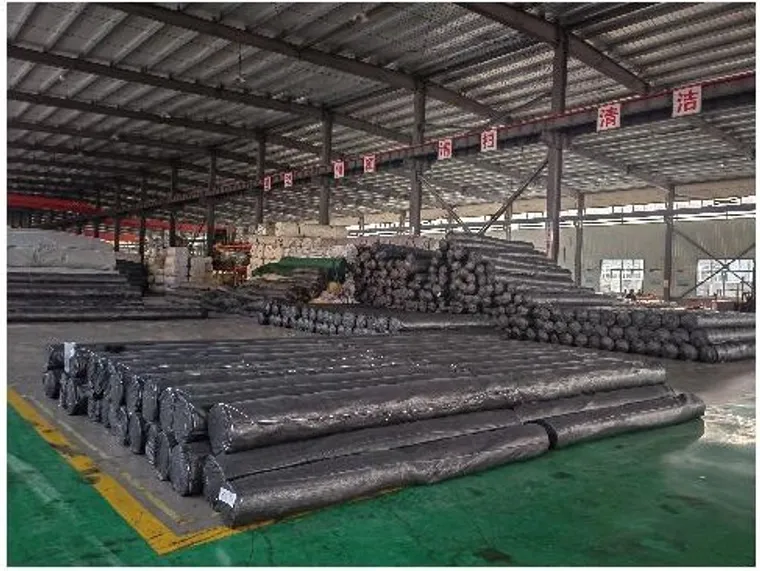
Rolls in store
GB/T 17638 · 100–800 gsm · to 25 kN/m
Needle-punched staple fiber fabric to GB/T 17638, from 100 to 800 gsm, for separation and filtration.