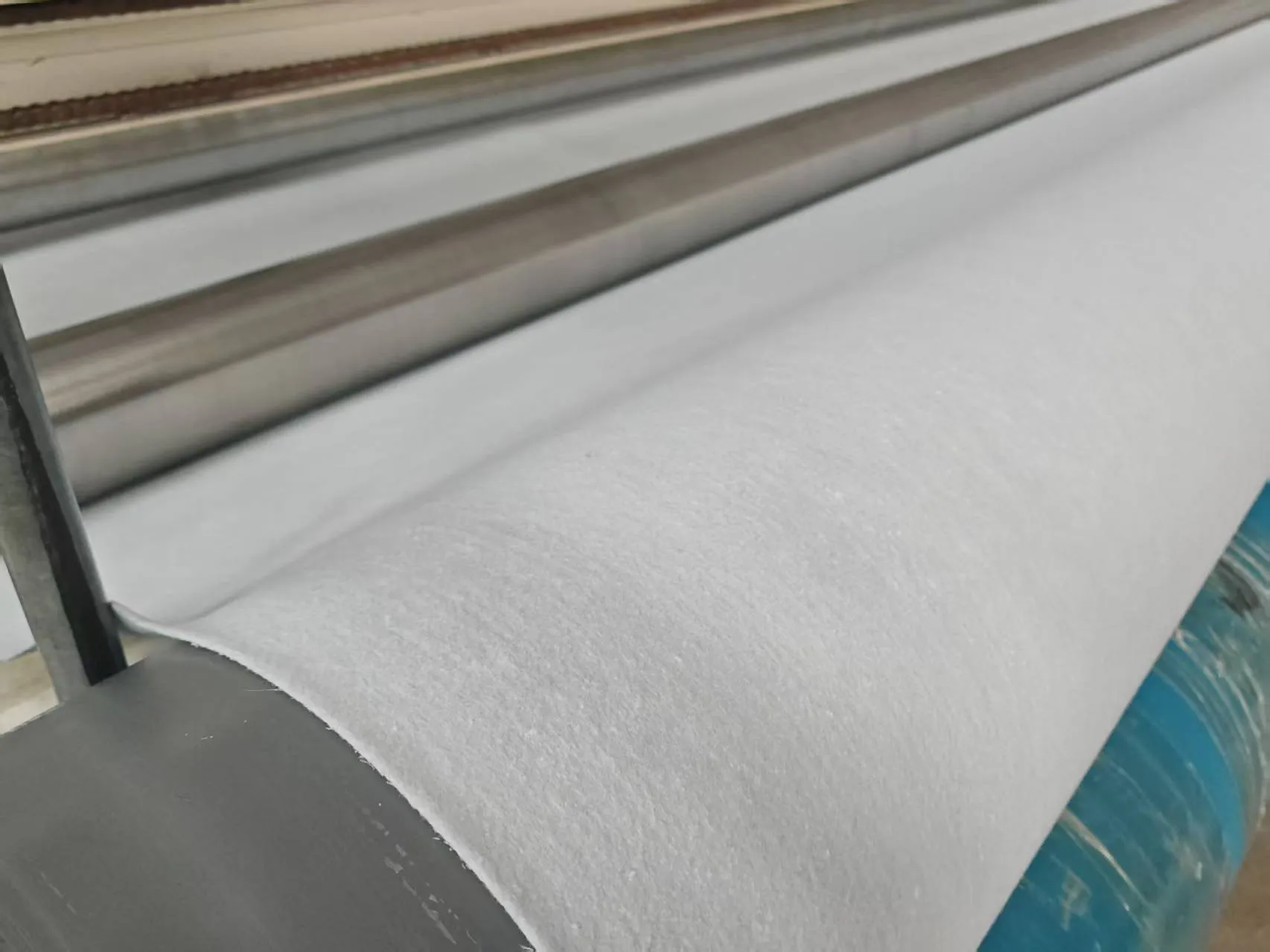
Staple fiber needle-punched nonwoven geotextile
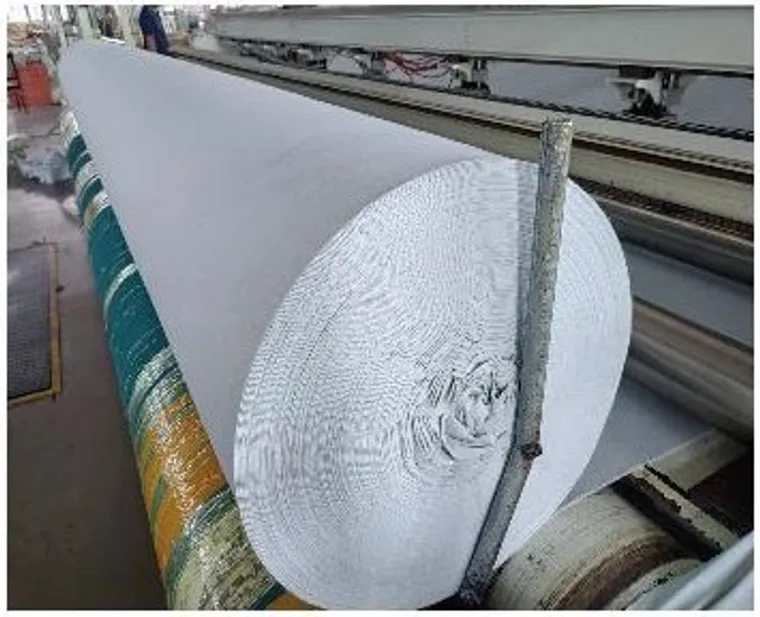
The staple fiber needle-punched nonwoven geotextile is made to GB/T 17638 in mass per unit area from 100 to 800 g/m2. Breaking strength runs from 2.5 to 25.0 kN/m in both directions, and puncture resistance from 0.3 to 4.0 kN across the range. It is the workhorse grade: specified wherever the job needs separation and filtration rather than high tensile strength.
Staple fiber geotextile specification
| Property | Value |
|---|---|
| Standard | GB/T 17638 |
| Mass per unit area | 100–800 g/m2 |
| Thickness | 0.9–5.0 mm |
| Breaking strength | 2.5–25.0 kN/m, both directions |
| Elongation at break | 25–100% |
| CBR puncture resistance | 0.3–4.0 kN |
| Tear strength | 0.08–0.60 kN |
| Opening size | O90 to O95, 0.07–0.2 mm |
| Vertical permeability | K x (10-1 to 10-3) cm/s |
| Width tolerance | -0.5% |
| Fiber | Polypropylene or polyester |
| Property | Value |
|---|---|
| Standard | GB/T 17638 |
| Mass per unit area | 100–800 g/m2 |
| Thickness | 0.9–5.0 mm |
| Breaking strength | 2.5–25.0 kN/m, both directions |
| Elongation at break | 25–100% |
Show all 11 rows
| Property | Value |
|---|---|
| CBR puncture resistance | 0.3–4.0 kN |
| Tear strength | 0.08–0.60 kN |
| Opening size | O90 to O95, 0.07–0.2 mm |
| Vertical permeability | K x (10-1 to 10-3) cm/s |
| Width tolerance | -0.5% |
| Fiber | Polypropylene or polyester |
What defines this product
Built for separation
It keeps sand, gravel, soil, and concrete from mixing into each other, which is what a sub-base needs underneath it.
Filters without clogging
It intercepts the fines that would wash out while water passes, and the openings resist filling up.
Conducts water in plane
It discharges excess liquid and gas out of the soil structure rather than trapping them.
Adds tensile strength
It adds resistance to deformation, which is what stabilizes the structure above it.
Fiber that lasts
Polypropylene or polyester, which makes the fabric corrosion resistant, insect resistant, and oxidation resistant.
Where it is used
-
Road and rail sub-base
Separating the sub-base from soft ground, so the aggregate stays where it was placed.
-
Dams and hydraulic works
Filtering seepage while holding the soil in place behind the structure.
-
Coastal and reclamation works
Holding fines in place where the ground is soft and the water moves.
GB/T 17638 has two published revisions and both are in use. The earlier revision specifies the fabric by mass per unit area; the later one specifies it by nominal breaking strength instead. That change matters when you are reading a quotation.
How the 2008 revision specifies it
The 2008 table runs across the mass range above. Thickness goes from 0.9 mm to 5.0 mm and breaking strength from 2.5 to 25.0 kN/m. Puncture resistance climbs from 0.3 kN to 4.0 kN and tear strength from 0.08 kN to 0.60 kN.
Two properties stay constant across the whole range. The equivalent opening size is 0.07 to 0.2 mm, and vertical permeability is quoted as K x (10-1 to 10-3) cm/s, where K is between 1.0 and 9.9.
That constancy is useful. It means the filter behavior does not change when you change the mass, so the mass can be chosen on strength alone.
How the 2017 revision specifies it
The 2017 revision drops mass per unit area as the ordering key and uses nominal breaking strength instead, running from 3 kN/m to 40 kN/m. Puncture strength under that revision runs from 0.6 kN to 7.0 kN.
It also adds durability requirements that the earlier table does not carry. The fabric has to keep at least 80% of its strength after acid and alkali attack, after oxidation, and after ultraviolet exposure.
Which one to quote against
If your drawing names a revision, quote against that one. If it names the standard without a year, say which you want, because the two tables do not key off the same property.
We will tell you which revision a quotation is written against. It is a small thing to state and a large thing to assume.
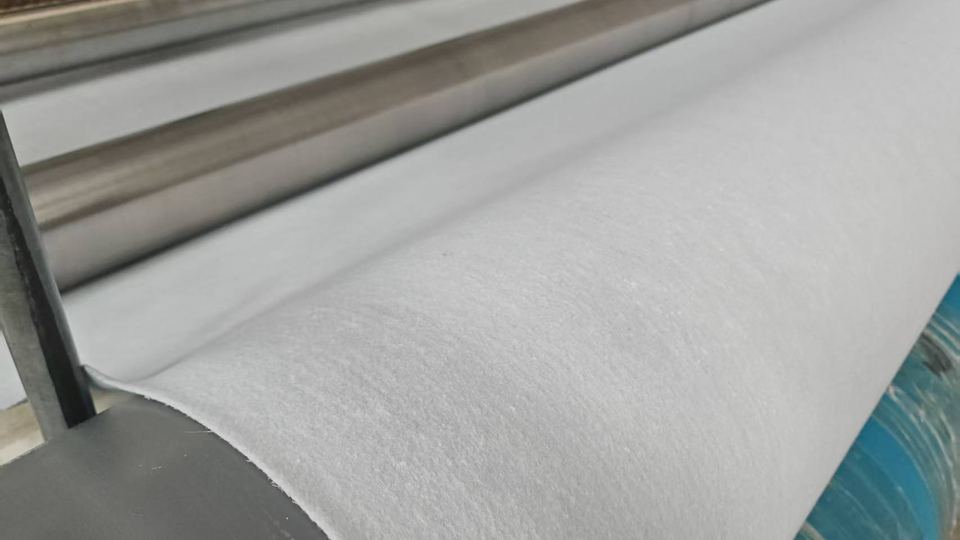
Fabric as produced
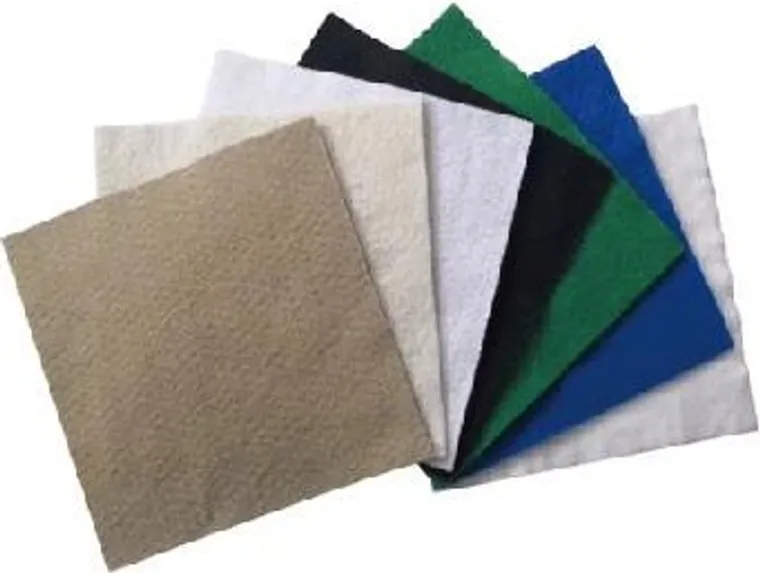
Fabric samples
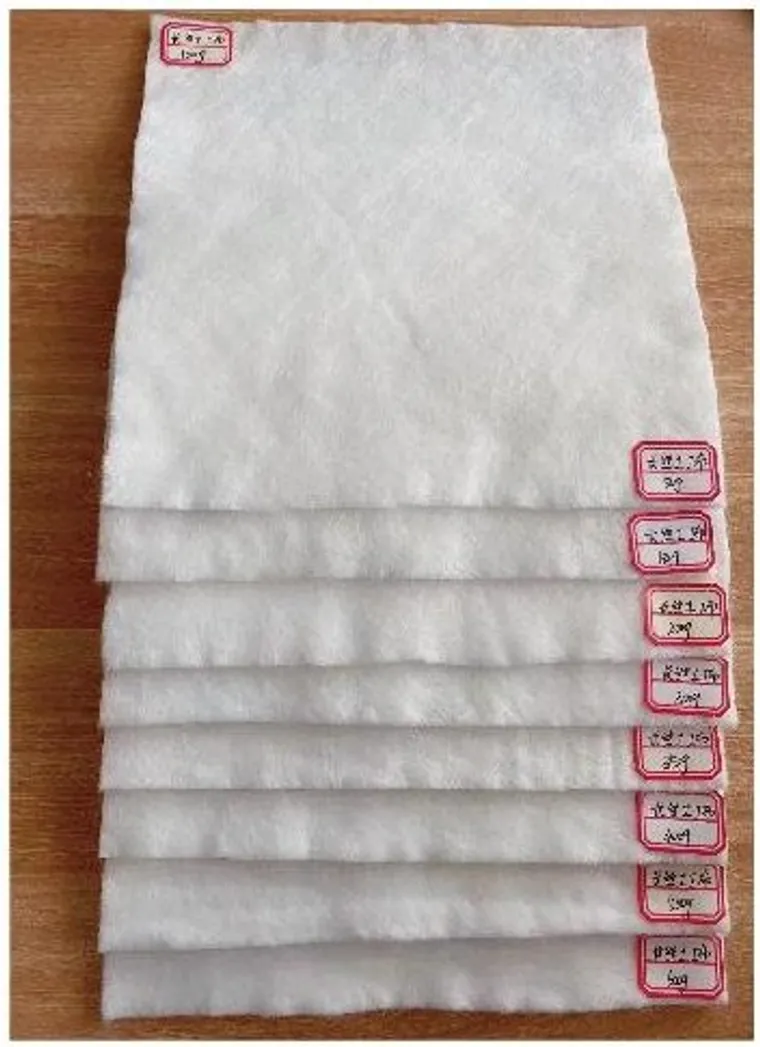
Fabric folded for dispatch