Rainwater storage module
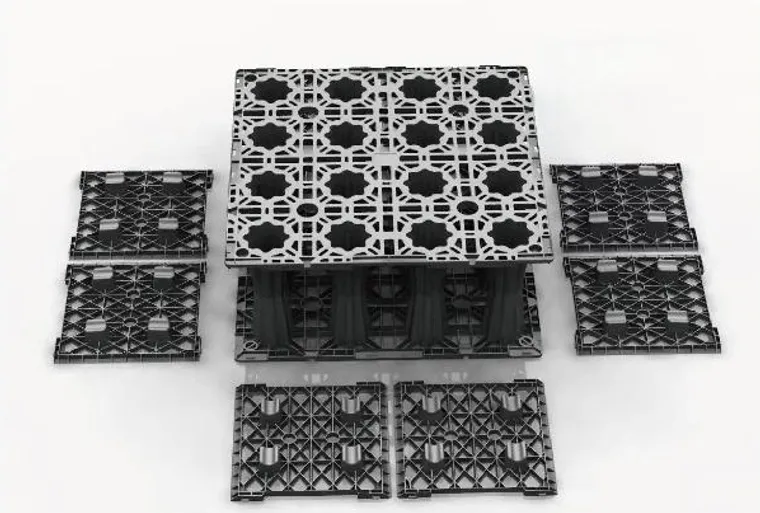
Rainwater storage modules are the blocks an underground tank is built from. As a rainwater storage module manufacturer and water storage module supplier we mold the same block for attenuation, harvesting, and infiltration tanks, because the wrap decides which one it becomes. Most of each block is void, and that void is the storage volume.
Water storage module specification
| Property | Value |
|---|---|
| Material | Regenerated polypropylene (PP) |
| Void | About 95% hollow |
| Water contact | No precipitation, no odor, resists strong acid and alkali |
| Service life | Over 40 years |
| Wrap | Waterproof cloth or geotextile, depending on the duty |
| Built into the structure | Inlet and outlet pipes, pump positions, inspection wells |
| Assembly | Stacked on site |
| Ground above | Returned to use once the tank is buried |
-
Material
- Value
- Regenerated polypropylene (PP)
-
Void
- Value
- About 95% hollow
-
Water contact
- Value
- No precipitation, no odor, resists strong acid and alkali
-
Service life
- Value
- Over 40 years
-
Wrap
- Value
- Waterproof cloth or geotextile, depending on the duty
-
Built into the structure
- Value
- Inlet and outlet pipes, pump positions, inspection wells
-
Assembly
- Value
- Stacked on site
-
Ground above
- Value
- Returned to use once the tank is buried
What defines this product
The void is the product
The storage volume is the gap inside the block rather than a chamber walled off from it, which is what keeps the excavation shallow.
Chosen for water contact
The polypropylene does not precipitate anything into the water, has no odor, and resists strong acid and alkali.
The wrap sets the duty
A waterproof cloth makes the tank hold water. A geotextile lets it discharge. The same block serves both, so the duty is a wrapping decision.
Shaped in the ground
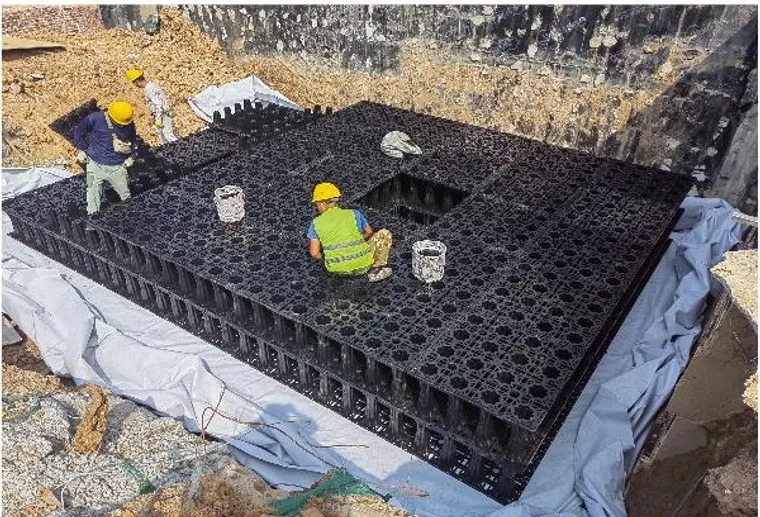
Because the units are modular, the tank generally takes the shape of the excavation rather than the excavation being dug to fit a tank.
Assembled where it sits
Modules are stacked on site, which shortens the program and avoids lifting a completed chamber into a hole.
Where it is used
-
Storage and reuse of rainwater
The stored volume is drawn back off for reuse rather than discharged.
-
Drainage along roads and parking lots
The tank sits under the surface it drains, so the paved area above keeps working.
-
Ecological shallow ditches
The module is used in storage and filtration systems that slow runoff before it leaves the site.
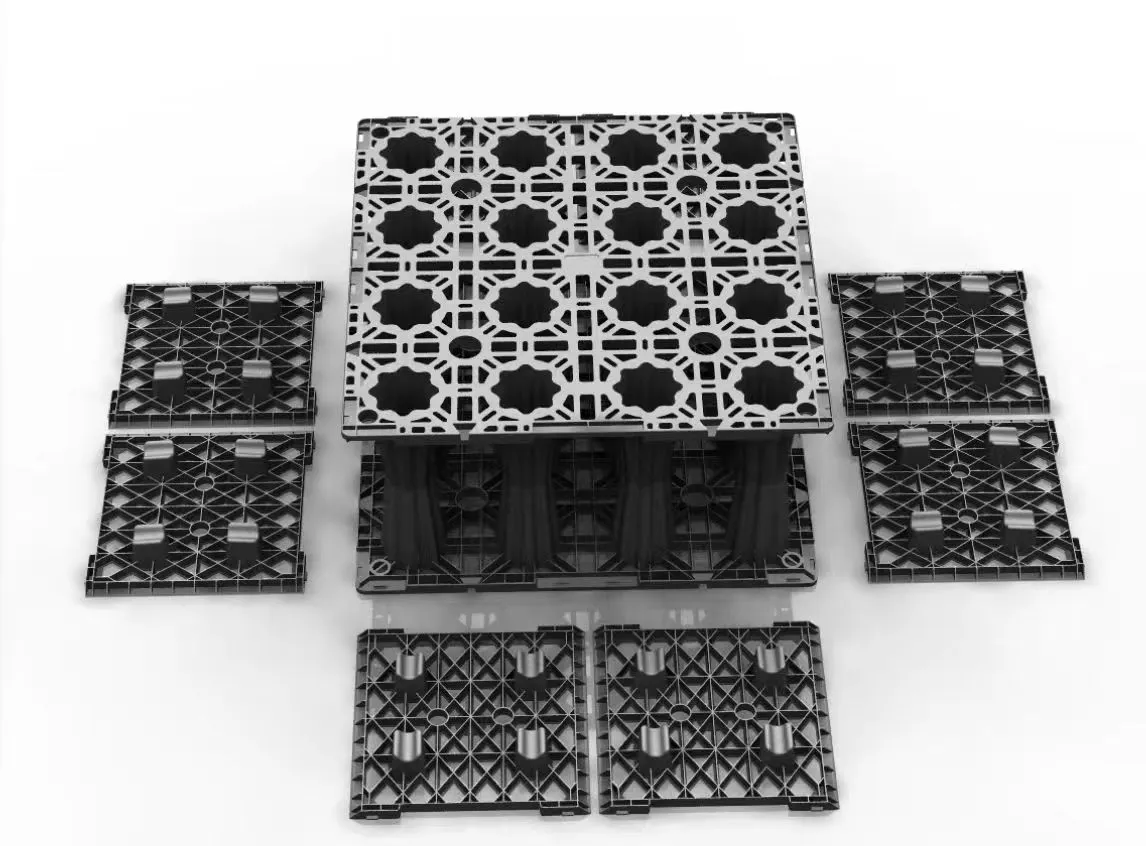
A geocellular tank is not a vessel. It is a volume of stacked blocks that happens to hold water, and almost everything about how it behaves on site comes from that one difference.
Why the void ratio is the whole point
The storage volume is the void inside the blocks, so the void ratio is the product. A block that is almost entirely hollow gives close to its own volume in storage. That is why a tank built from modules takes far less excavation than a chamber of the same capacity, and why it can be buried under a surface that has to keep working.
It also means the block carries very little material. The load above the tank is taken by the shape of the stack rather than by mass.
What the material has to do
An attenuation tank holds water for hours. A harvesting tank holds it for weeks, in contact with the module the whole time. That changes what the module has to be, and it is why the material matters more on some jobs than others.
The polypropylene we mold does not precipitate anything into the water after immersion, has no odor, and resists strong acid and alkali. Those are the properties that count when the water is going to be kept and then used.
What the wrap decides
The module does not decide whether the tank stores water or lets it go. The wrap does. A waterproof cloth makes the tank a store. A geotextile makes it a soakaway. Both use the same block and both are wrapped the same way on site.
That makes the wrap part of the specification rather than an accessory. It also means the duty of the tank has to be settled before the modules are ordered, because the wrap is chosen with it.
What a module does not do
A storage module holds water. It does not clean it and it does not remove silt. Independent guidance is explicit that a geocellular system generally provides no water quality treatment of its own.
If the site needs treatment, that has to come from a stage before the tank, and the sediment it catches has to be removable. Put that stage in the design rather than hoping the tank copes.
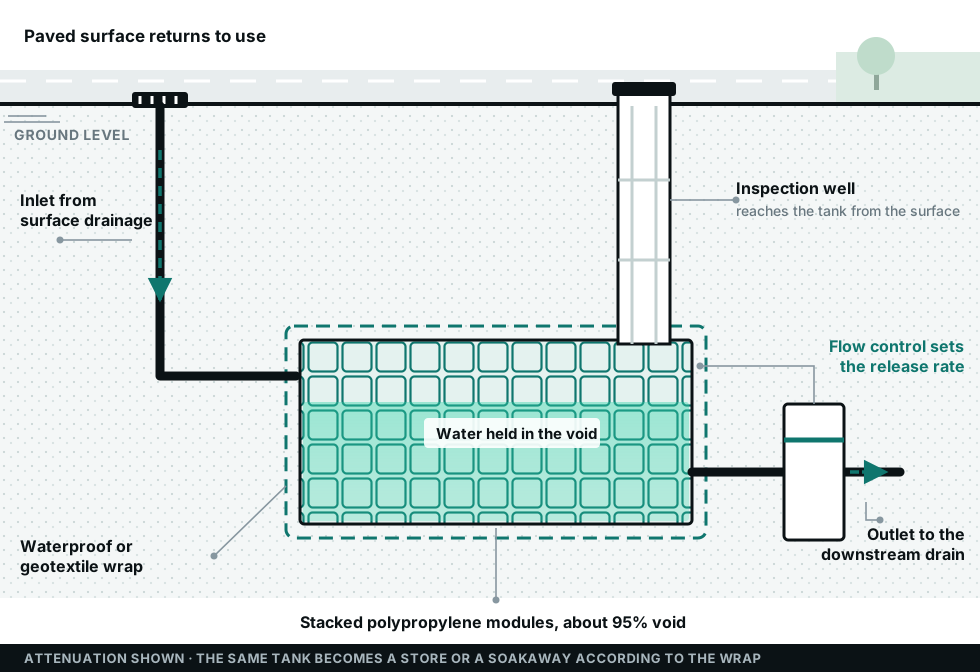
What has to be designed in
The block carries water, but the system needs more than blocks. Inlet and outlet pipes have to be set at the right levels. A pump position has to be left clear if the water is to be reused. An inspection well has to reach the tank so it can be looked at after it is buried.
None of that can be added afterward. Once the tank is covered and the surface above is back in use, the only way in is the access that was built at the time.
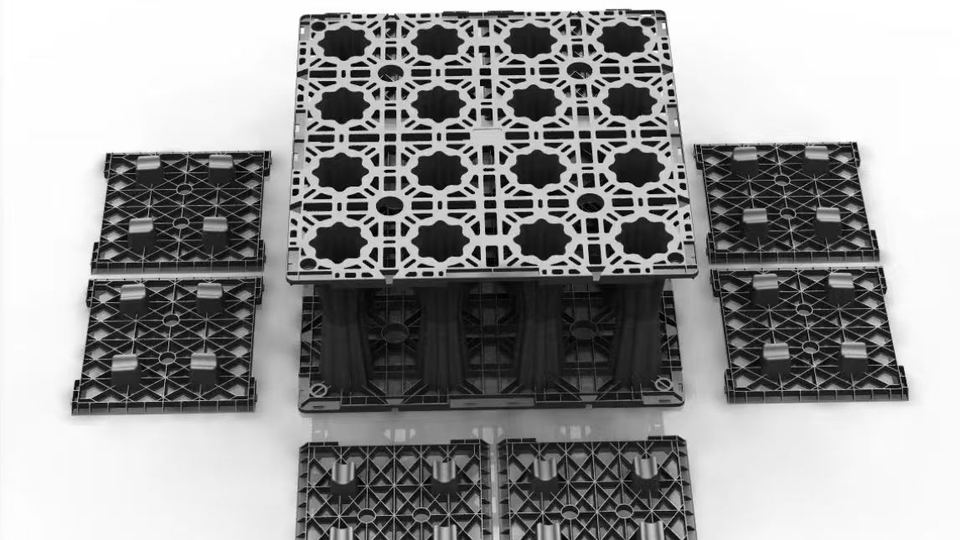
Single module
Tank assembled on site
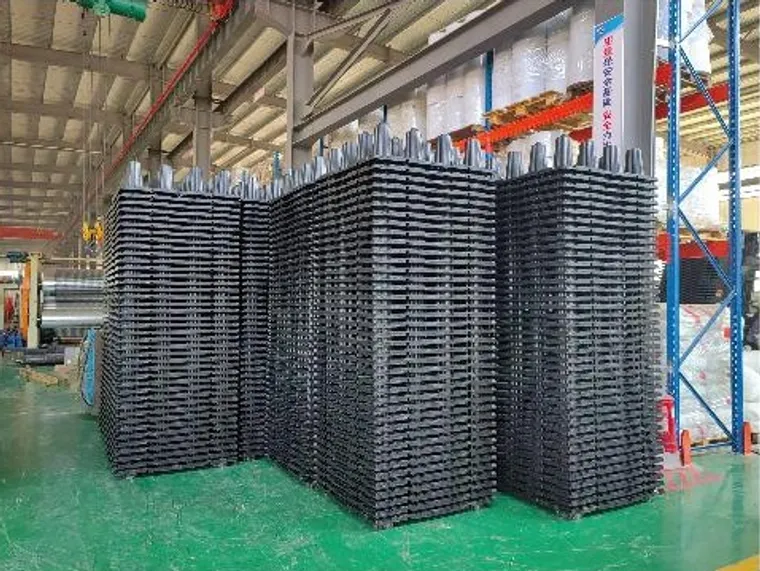
Modules in stock